
Hungarian villages are often seen as quiet dots on a map, tucked far from the busy cities. But these small communities hold a secret. Hollókő is so unique it earned a spot as a UNESCO World Heritage site. What really sets these villages apart is how they invite you into daily life where centuries-old traditions are not just preserved but actually lived every day, making each visit feel like stepping into a living story.
Table of Contents
- The Unique Charm Of Hungarian Villages
- Cultural Richness And Traditions In Rural Hungary
- Historical Significance Of Hungarian Villages
- Natural Beauty And Outdoor Activities In Villages
- Connecting With Local Communities And Experiences
Quick Summary
| Takeaway | Explanation |
|---|---|
| Experience authentic rural life in Hungary. | Visit villages to immerse yourself in traditional Hungarian culture and community practices. |
| Explore traditional architecture in villages. | Discover unique building styles that reflect Hungary’s rich regional heritage and history. |
| Engage with local crafts and festivals. | Participate in local events to learn about artisanal skills and celebrate cultural traditions. |
| Enjoy outdoor activities in picturesque landscapes. | Take advantage of hiking, birdwatching, and cycling opportunities in Hungary’s beautiful countryside. |
| Connect deeply with local communities. | Build genuine relationships with residents through shared meals and participation in village life. |
The Unique Charm of Hungarian Villages
Hungarian villages represent more than just geographic locations. They are living museums of cultural heritage, preserving centuries of tradition, architectural styles, and community practices that have remained largely unchanged through generations. These remarkable settlements offer visitors an authentic glimpse into rural Hungarian life, where history breathes through every cobblestone street and traditional wooden-framed house.
Preserving Traditional Rural Architecture
The architectural landscape of Hungarian villages is a testament to the country’s rich cultural diversity. Traditional houses, often constructed with local materials like clay, wood, and stone, showcase distinctive regional building techniques passed down through generations. Learn more about Hungary’s hidden architectural treasures. For instance, villages in the Palóc region feature ornate white-washed houses with intricate woodwork and colorful decorative elements that reflect the community’s artistic heritage.
Key characteristics of traditional Hungarian village architecture include:
To help distinguish the key elements of traditional Hungarian village architecture, the following table summarizes their main features and cultural significance.
| Architectural Feature | Description | Cultural Significance |
|---|---|---|
| Compact, single-story homes | Residential buildings typically have one level, with thatched or tiled roofs | Reflects efficient rural design and resources |
| Decorative front facades | Painted wooden gates and ornate facades enhance visual appeal | Expresses local artistic heritage |
| Central courtyards | Homes are arranged around shared yards for family activities | Supports extended family and communal living |
| Use of local materials | Construction primarily uses clay, wood, and stone sourced nearby | Showcases sustainable building practices |
| Functional agricultural spaces | Integrated spaces for storing tools, livestock, and agricultural work | Links daily life with farming traditions |
- Compact, single-story homes with thatched or tiled roofs
- Decorative front facades with painted wooden gates
- Central courtyards designed for extended family living
- Integration of functional spaces for agricultural activities
Cultural Preservation and Community Life
Unlike modern urban environments, Hungarian villages maintain strong community bonds and traditional practices. According to UNESCO World Heritage research, villages like Hollókő demonstrate how rural communities have successfully preserved their cultural identity.
Local festivals, traditional crafts, folk music, and communal agricultural practices continue to play a significant role in village life, offering visitors an immersive experience of authentic Hungarian culture.
These villages are not static museums but living, breathing communities where traditions are actively practiced and celebrated. From traditional costume making to regional culinary practices, each village offers a unique window into Hungary’s rich cultural tapestry. Visitors can witness artisan crafts, participate in local festivals, and experience a way of life that has remained remarkably consistent over centuries.

Cultural Richness and Traditions in Rural Hungary
Rural Hungary represents a profound cultural landscape where traditions are not merely historical artifacts but living, breathing practices that continue to shape community identity. These rural traditions encompass a complex network of social interactions, artistic expressions, and communal practices that have been carefully preserved across generations.
Folk Arts and Craftsmanship
Traditional Hungarian folk arts represent an extraordinary cultural inheritance deeply rooted in rural communities. Explore the depths of Hungarian cultural heritage to understand the intricate world of craftsmanship. Embroidery, pottery, woodcarving, and textile arts are not just decorative skills but powerful storytelling mediums that communicate familial and regional histories.
Key elements of Hungarian folk craftsmanship include:
- Intricate embroidery patterns unique to specific regions
- Hand-painted ceramic works with geometric and floral motifs
- Traditional wooden furniture with symbolic carved designs
- Handwoven textiles representing family and community narratives
Music and Dance Traditions
Folk music and dance in rural Hungary are more than entertainment. According to ethnographic research, they represent complex social communication systems that connect generations and preserve cultural memory. Traditional Hungarian folk dances like the csárdás involve intricate partner movements that reflect historical social interactions, with each step and gesture carrying profound cultural significance.
These musical and dance traditions are characterized by their regional variations, with each rural community maintaining unique performance styles that reflect local historical experiences. Musicians using traditional instruments like the tárogató (a wooden wind instrument) and cimbalom (a hammered dulcimer) continue to play a crucial role in maintaining these rich cultural expressions.
Historical Significance of Hungarian Villages
Hungarian villages are not merely geographic locations but living historical archives that narrate centuries of social, economic, and cultural transformations. These settlements provide an unparalleled window into the complex historical journey of rural Hungarian society, preserving architectural, social, and cultural narratives that have survived multiple historical epochs.
Medieval Roots and Settlement Patterns
The historical landscape of Hungarian villages traces back to medieval settlement patterns established during the Kingdom of Hungary. Discover more about Hungary’s fascinating historical landmarks to understand the broader context of these rural communities. These villages emerged from feudal agricultural systems, with carefully planned layouts that reflected complex social hierarchies and economic structures of their time.
Key historical characteristics of medieval Hungarian village settlements include:
- Centralized village centers with church and community spaces
- Agricultural land division reflecting communal ownership practices
- Architectural designs influenced by regional cultural and economic conditions
- Social stratification evident in housing and land allocation patterns
Social Transformation and Resilience
Hungarian villages have demonstrated remarkable resilience through significant historical transformations. From the Ottoman occupation to the Communist era, these communities adapted while maintaining core cultural identities. The villages survived multiple political regimes, economic shifts, and social restructurings, serving as testament to the enduring spirit of rural Hungarian communities.
These villages represent more than historical remnants. They are dynamic spaces where historical memory is actively preserved, where traditional practices coexist with modern influences, and where each building, street, and communal space tells a story of survival, adaptation, and cultural continuity. The historical significance of Hungarian villages lies not just in their physical structures, but in their ability to maintain cultural integrity through centuries of profound societal changes.
Natural Beauty and Outdoor Activities in Villages
Hungarian villages offer a breathtaking landscape of natural beauty that extends far beyond traditional architectural charm. These rural environments provide immersive outdoor experiences that connect visitors with pristine natural landscapes, traditional agricultural settings, and diverse ecosystems unique to the Hungarian countryside.
Landscape and Ecological Diversity
Uncover Hungary’s hidden natural wonders and explore the remarkable ecological diversity of rural landscapes. Hungarian villages are nestled within varied terrains ranging from rolling hills and fertile plains to forested regions and riverine landscapes. These environments support rich biodiversity and offer exceptional opportunities for nature exploration, hiking, birdwatching, and understanding agricultural ecosystems.
Key outdoor activities in Hungarian village landscapes include:
- Hiking through scenic countryside trails
- Birdwatching in protected natural habitats
- Cycling along rural routes with panoramic views
- Photography of untouched natural landscapes
Agricultural Tourism and Nature Interaction
According to environmental research, rural landscapes provide significant opportunities for nature-based recreation and outdoor activities that contribute to visitors’ physical and mental well-being. Hungarian villages offer unique agricultural tourism experiences where visitors can engage directly with natural environments through activities like harvest participation, farm tours, and traditional agricultural workshops.
These experiences go beyond simple sightseeing, providing profound connections with natural cycles, sustainable farming practices, and rural ecological systems. Visitors can observe traditional farming methods, interact with local flora and fauna, and gain insights into the intricate relationship between human communities and their natural surroundings. The villages serve as living classrooms where ecological understanding meets cultural heritage, offering immersive experiences that highlight the delicate balance between human activity and natural preservation.
Connecting with Local Communities and Experiences
Hungarian villages offer more than picturesque landscapes and historical architecture. They provide profound opportunities for authentic cultural immersion, where visitors can forge genuine connections with local communities, understand traditional ways of life, and participate in meaningful social interactions that transcend typical tourist experiences.
Community Engagement and Social Interactions
Explore the rich tapestry of Hungarian community experiences to understand the depth of social connections in rural settings. Village interactions are characterized by genuine hospitality, where residents welcome visitors not as tourists, but as temporary members of their community. These interactions involve shared meals, participation in local festivals, and opportunities to learn traditional crafts and skills directly from community members.
Key aspects of community engagement in Hungarian villages include:
- Participating in traditional agricultural activities
- Attending local festivals and cultural celebrations
- Learning traditional crafts from village artisans
- Sharing meals with local families
Economic and Social Impact of Community Tourism
According to rural development research, community-based tourism can transform rural economies by creating sustainable income streams and preserving cultural heritage. Hungarian villages demonstrate how tourism can become a collaborative economic model, where visitors directly contribute to local economic sustainability while experiencing authentic cultural exchanges.
These community interactions are not transactional but transformative experiences. Visitors gain insights into local life, understand complex social dynamics, and contribute to preserving traditional practices. By engaging with local communities, travelers become active participants in cultural preservation, supporting economic resilience and helping maintain the unique social fabric of Hungarian rural life. The experience goes beyond sightseeing, offering a profound understanding of community, tradition, and human connection.
The table below summarizes unique aspects of community engagement and the economic impacts of tourism in Hungarian villages.
| Community Activity | Visitor Experience | Economic & Social Impact |
|---|---|---|
| Participating in agricultural tasks | Hands-on farming and harvest participation | Supports local farmers and sustains traditions |
| Attending local festivals | Celebrating folk culture with residents | Boosts cultural pride and event-based income |
| Learning traditional crafts | Guided workshops from village artisans | Preserves artisanal skills and creates jobs |
| Sharing meals with families | Enjoying authentic Hungarian home-cooked food | Fosters relationships and supports local families |
| Staying in village accommodations | Overnight stays in traditional guesthouses | Generates revenue for rural households |
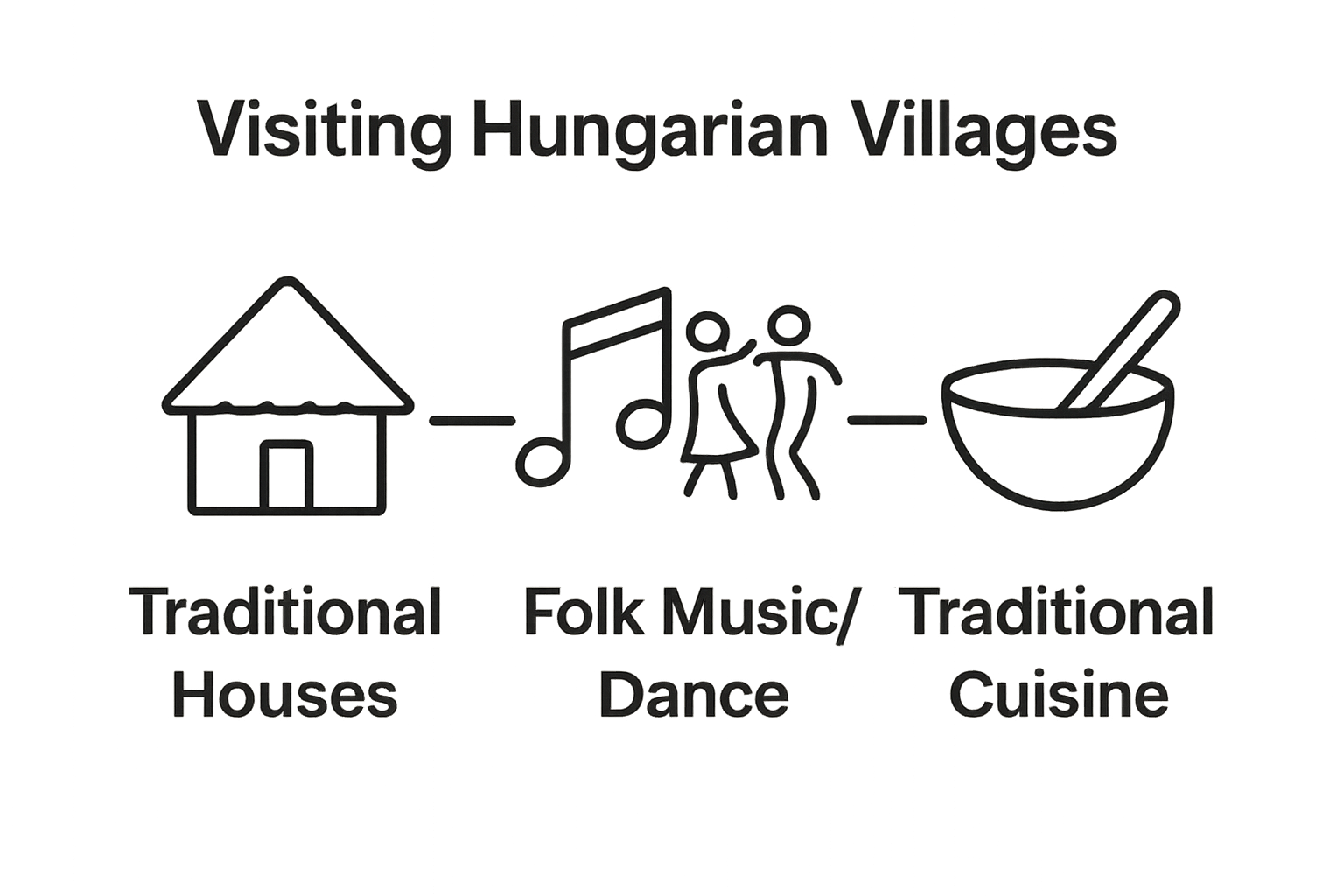
Bring Hungarian Village Culture Closer: Transform Your Travel Experience
You have just discovered why visiting Hungarian villages is not only important but truly rewarding. Maybe you feel overwhelmed by the idea of finding authentic experiences or worry about missing hidden cultural gems. Traditional architecture, living folk customs, and true community immersion can seem out of reach without local guidance. But you deserve access to the real stories, flavors, and traditions that Hungarian villages offer.
Do not let your journey stop at curiosity. Dive deeper into village life and take home unforgettable memories. Visit It’s Hungary now for expert tips, curated guides, and exclusive insights designed for travelers like you. Start planning your genuine Hungarian adventure today before these traditions fade from everyday life.
Frequently Asked Questions
What is the significance of visiting Hungarian villages?
Visiting Hungarian villages offers an authentic experience of rural life, where traditions, cultural heritage, and community practices are preserved. It provides insight into the historical and social evolution of rural Hungary.
How does traditional architecture reflect cultural heritage in Hungarian villages?
Traditional architecture in Hungarian villages features unique building techniques and styles that reflect regional cultural diversity, showcasing local materials and artistic heritage through decorative elements and functional designs.
What cultural experiences can visitors expect in Hungarian villages?
Visitors can engage in local festivals, observe traditional crafts, and participate in communal agricultural activities, allowing them to immerse themselves in the vibrant cultural practices that define rural Hungarian life.
What outdoor activities are available in Hungarian villages?
Hungarian villages offer various outdoor activities such as hiking, birdwatching, and agricultural tourism, allowing visitors to connect with nature and experience the ecological diversity of the Hungarian countryside.


