
Hungarian festivals might look like dazzling spectacles of colorful costumes, music, and endless food. Some traditions date back over a thousand years, connecting villagers and city dwellers alike through generations. Most people expect these festivals to be all about nostalgia and old customs. The real surprise is how these ancient celebrations are constantly refreshed, blending new ideas with age-old rituals to keep Hungarian identity alive and vibrant today.
Table of Contents
- What Are Hungarian Festival Traditions And Their Origins?
- Why Hungarian Festivals Matter: Cultural Significance And Heritage
- How Hungarian Festivals Reflect Community Values And Identity
- Key Elements Of Hungarian Festivals: Food, Music, And Dance
- Real-World Examples Of Popular Hungarian Festivals Today
Quick Summary
| Takeaway | Explanation |
|---|---|
| Hungarian festivals preserve cultural identity | Festivals act as living archives, showcasing Hungary’s rich cultural heritage and traditions through community participation. |
| Community engagement is key in festivals | Participation fosters social bonds, reinforces shared narratives, and strengthens community resilience across generations. |
| Culinary traditions reflect heritage | Food at festivals is more than sustenance; it symbolizes historical knowledge and cultural identity, celebrating local ingredients and family recipes. |
| Festivals adapt to contemporary influences | Modern celebrations blend historical practices with current artistic expressions, demonstrating the dynamic nature of Hungarian culture and identity. |
| Festivals serve as educational platforms | Engaging in traditional music, dance, and rituals allows younger generations to learn cultural values and narratives through immersive experiences. |
What Are Hungarian Festival Traditions and Their Origins?
Hungarian festival traditions represent a vibrant tapestry of cultural expression that weaves together centuries of historical influences, regional customs, and deeply rooted community connections. These celebrations are far more than mere events they are living narratives that communicate Hungarian identity, resilience, and collective memory.
Historical Roots of Hungarian Festivals
The origins of Hungarian festival traditions can be traced back to ancient agricultural cycles, religious observations, and tribal practices that predate modern Hungary. According to UNESCO’s Intangible Cultural Heritage, many Hungarian festivals have roots in pre-Christian traditions that honor seasonal changes, agricultural harvests, and community transitions.
Key characteristics of traditional Hungarian festivals include:
- Preservation of ancestral practices
- Strong community participation
- Integration of music, dance, and ritualistic performances
- Celebration of agricultural and seasonal milestones
Cultural Significance and Community Connection
Hungarian festivals serve as powerful social mechanisms that reinforce collective identity and intergenerational knowledge transfer. Research from the Hungarian Academy of Sciences highlights how these festivals function as living cultural archives, allowing communities to maintain connections with their historical narratives.
These celebrations often feature traditional costumes, folk music, intricate dance performances, and regional culinary specialties that represent specific local identities. Whether commemorating harvest seasons, religious events, or historical milestones, each festival reflects a unique aspect of Hungarian cultural heritage.
By participating in these festivals, Hungarians not only honor their past but also create dynamic, evolving cultural expressions that bridge historical traditions with contemporary experiences. For those interested in diving deeper into Hungarian cultural practices, our comprehensive guide on understanding Hungarian traditions offers extensive insights into these rich cultural celebrations.
Why Hungarian Festivals Matter: Cultural Significance and Heritage
Hungarian festivals transcend mere celebrations they are profound cultural mechanisms that preserve national identity, transmit generational knowledge, and maintain social cohesion through intricate symbolic practices and communal experiences.
Preserving Cultural Memory
These festivals function as living archives of Hungarian heritage, enabling communities to reconnect with their historical roots and ancestral traditions. According to anthropological research from Central European University, festivals serve as critical platforms for cultural transmission, allowing younger generations to understand and appreciate their cultural lineage through immersive experiences.
Key aspects of cultural preservation through festivals include:
- Maintaining linguistic traditions
- Showcasing traditional craftsmanship
- Perpetuating ancient musical and dance forms
- Reinforcing regional and national identities
Social Cohesion and Community Resilience
Hungarian festivals represent more than cultural performances they are powerful social bonding mechanisms. Collective participation in these events strengthens community connections, creates shared emotional experiences, and builds social resilience. By engaging in traditional celebrations, communities reaffirm their collective narrative and mutual support systems.
The complexity of these festivals lies in their ability to simultaneously honor historical traditions while adapting to contemporary social dynamics. From rural harvest celebrations to urban cultural festivals, these events demonstrate the dynamic nature of Hungarian cultural expression.
For travelers and culture enthusiasts seeking deeper insights into Hungarian cultural practices, our comprehensive guide to exploring Hungary offers an expansive look into the nation’s rich cultural landscape and the significance of its vibrant festival traditions.
How Hungarian Festivals Reflect Community Values and Identity
Hungarian festivals are intricate social mechanisms that go far beyond entertainment they are profound expressions of collective identity, community values, and cultural resilience, embodying the complex narrative of Hungarian social experience through symbolic performances and shared rituals.
Symbolic Representations of Community Values
These festivals serve as powerful platforms for articulating core community values, transforming abstract cultural principles into tangible, experiential expressions. According to anthropological research from the Hungarian Academy of Sciences, festival traditions communicate fundamental social norms such as mutual respect, solidarity, intergenerational connection, and regional pride.
Key values demonstrated through Hungarian festivals include:
- Respect for agricultural heritage
- Celebration of community interdependence
- Honoring ancestral knowledge
- Maintaining cultural continuity
- Embracing regional diversity
Mechanisms of Cultural Identity Transmission
Festivals function as dynamic educational spaces where cultural knowledge is seamlessly transferred between generations. Through music, dance, traditional costumes, and ritualistic performances, younger community members absorb complex cultural narratives and emotional experiences that textbooks cannot capture.
The performative aspects of these festivals create immersive learning environments that enable participants to internalize cultural values through active engagement rather than passive observation. Regional variations in festival practices highlight the nuanced ways different Hungarian communities express their unique identities while maintaining a broader national cultural framework.
For travelers and culture enthusiasts eager to explore the deeper dimensions of Hungarian cultural practices, our comprehensive guide to understanding Hungarian traditions offers an illuminating journey into the rich tapestry of community life and cultural expression.
Key Elements of Hungarian Festivals: Food, Music, and Dance
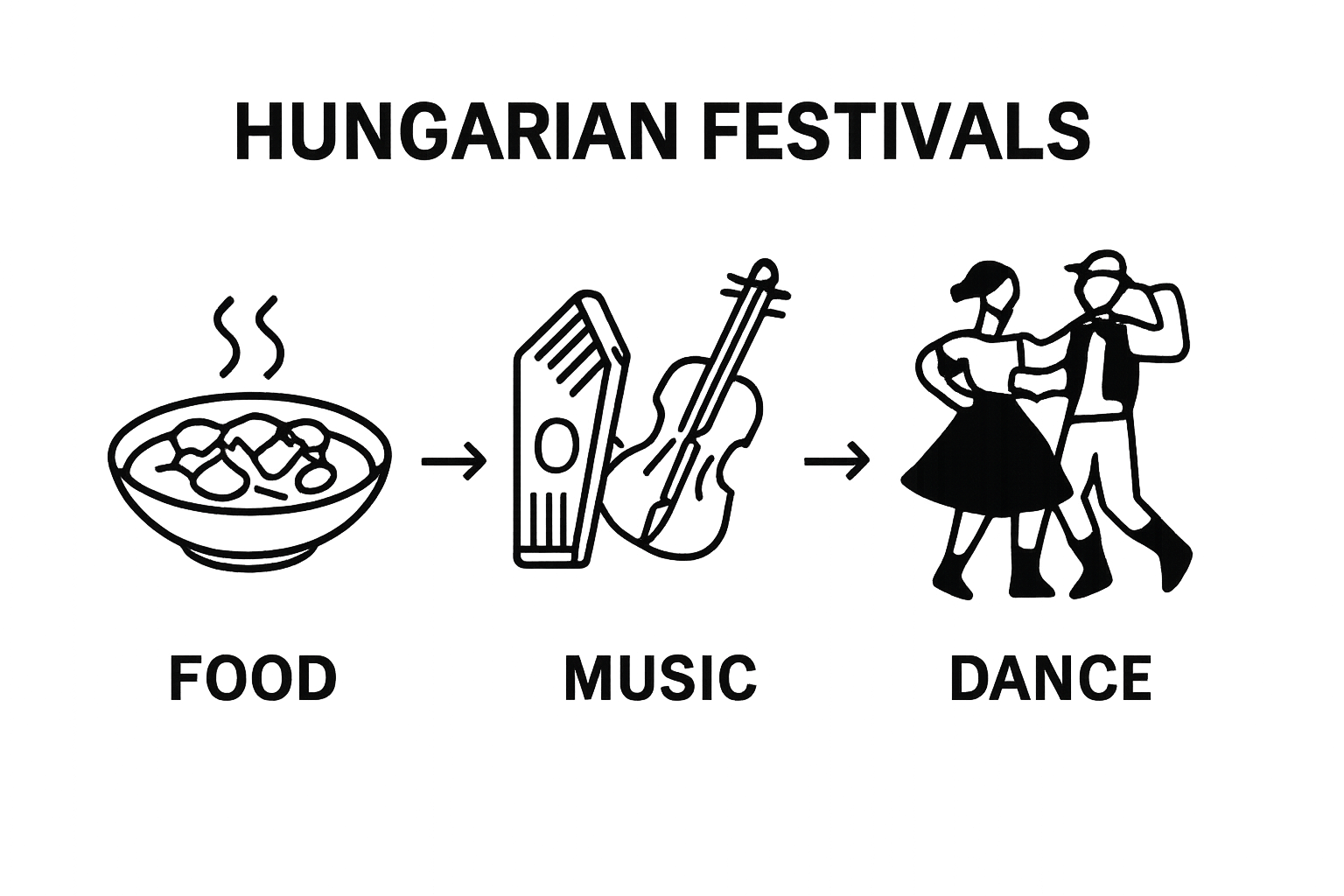
Hungarian festivals are complex cultural expressions where food, music, and dance intertwine to create immersive experiences that celebrate national heritage, regional diversity, and communal connections.
To clarify the essential building blocks of Hungarian festival traditions, the following table summarizes the key elements, their roles, and typical forms seen at festivals.
| Element | Role in Festival Traditions | Typical Forms or Examples |
|---|---|---|
| Food | Medium for cultural expression, heritage sharing | Goulash, langos, töltött káposzta |
| Music | Storytelling, emotional connection, identity | Folk music, zither, violin, cimbalom |
| Dance | Narrates stories, represents regional identity | Folk dance, region-specific choreographies |
| Costumes | Symbolizes regional and historical identity | Traditional embroidery, folk attire |
| Rituals | Marks seasonal or religious milestones | Harvest celebrations, winter carnivals |
| Community Participation | Fosters belonging and intergenerational learning | Communal cooking, shared performances |
| These three elements function as critical storytelling mechanisms that communicate historical narratives and social values. |
Culinary Traditions as Cultural Expressions
Food serves as more than sustenance in Hungarian festivals it is a profound medium of cultural communication. According to ethnographic research on Hungarian gastronomy, traditional dishes like goulash, langos, and töltött káposzta represent generations of agricultural knowledge, regional ingredients, and familial cooking techniques.
Key culinary characteristics in Hungarian festivals include:
- Preparation of dishes using generational recipes
- Emphasis on locally sourced ingredients
- Communal cooking and sharing practices
- Symbolic meaning behind specific dishes
- Representation of regional agricultural heritage
Musical and Dance Performances
Hungarian folk music and dance are intricate art forms that transcend mere performance they are living historical archives. Traditional musical instruments like the zither, violin, and cimbalom create soundscapes that connect contemporary participants with ancestral musical traditions. Folk dance performances, characterized by complex choreography and regional variations, narrate stories of community life, historical events, and emotional experiences.
The performative aspects of music and dance in Hungarian festivals demonstrate remarkable complexity rhythm, movement, and musical composition are carefully choreographed to represent specific cultural contexts and regional identities.
For culinary enthusiasts and travelers interested in exploring authentic Hungarian gastronomic experiences, our guide to must-try Hungarian dishes offers an exciting journey into the nation’s rich culinary landscape.
Real-World Examples of Popular Hungarian Festivals Today
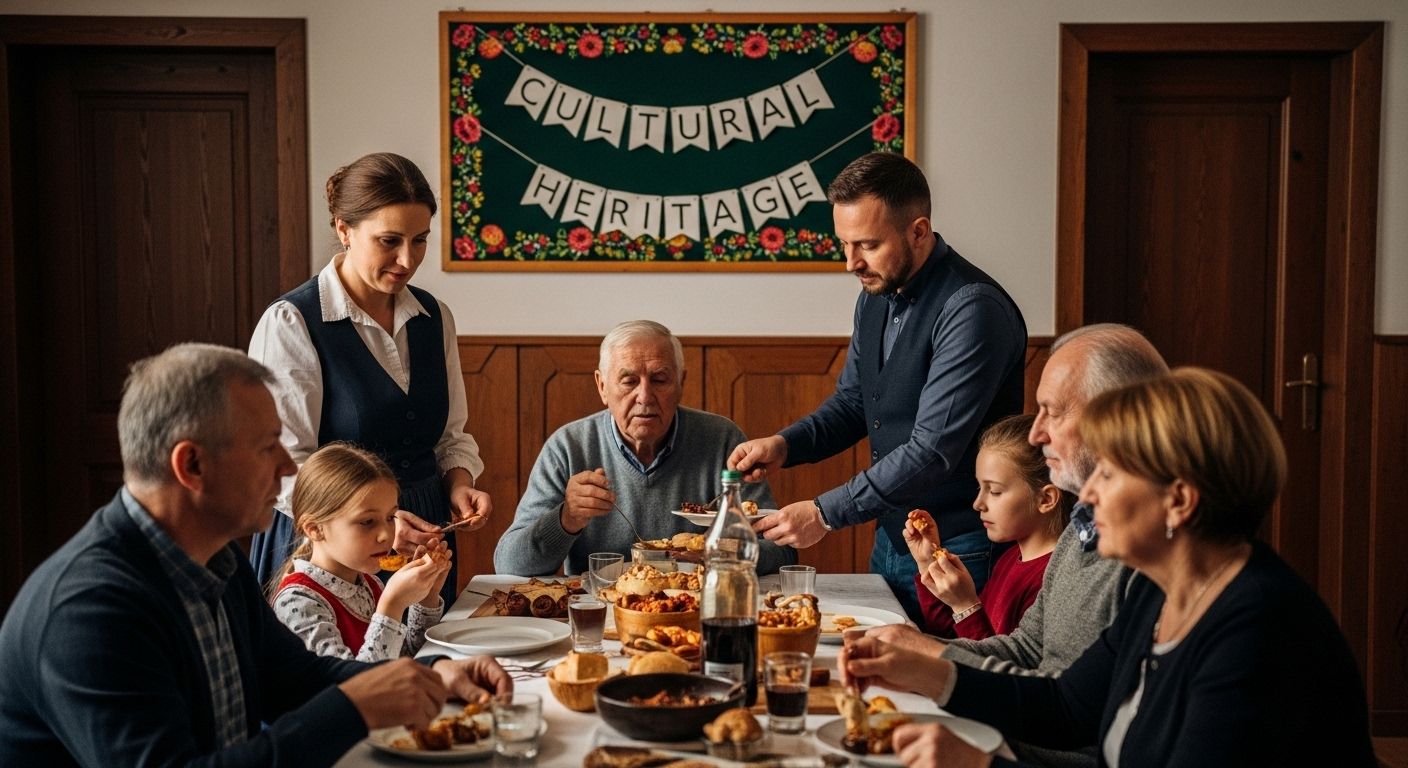
Contemporary Hungarian festivals represent a dynamic intersection of historical traditions and modern cultural expressions, showcasing the nation’s ability to preserve heritage while embracing contemporary social experiences. These celebrations reflect the evolving nature of Hungarian cultural identity across different regions and communities.
Urban and Rural Festival Landscape
Modern Hungarian festivals span a diverse range of experiences, from traditional rural celebrations to sophisticated urban cultural events.
This table provides a concise overview of several major Hungarian festivals, highlighting their location, type, and distinctive characteristics for quick comparison.
| Festival Name | Location | Type | Distinctive Features |
|---|---|---|---|
| Sziget Festival | Budapest | International music/cultural | Multi-genre concerts, global arts programs |
| Busójárás | Mohács | Traditional winter carnival | Masked parades, folk rituals, folklore performances |
| Budapest Wine Festival | Budapest | Culinary/wine | Regional wines, local foods, cultural events |
| Debrecen Flower Carnival | Debrecen | Cultural/parade | Elaborate flower floats, citywide performances |
| Folk Arts Festival | Mesterségek | Folk arts/crafts | Artisan demonstrations, traditional music and dance |
| According to cultural studies from the Hungarian National Tourism Agency, these festivals serve as critical platforms for cultural expression and community engagement. |
Key contemporary Hungarian festivals include:
- Sziget Festival in Budapest (international music and cultural event)
- Busójárás in Mohács (traditional winter carnival)
- Budapest Wine Festival
- Debrecen Flower Carnival
- Folk Arts Festival in Mesterségek
Significance of Contemporary Celebrations
Modern Hungarian festivals are not mere nostalgic reproductions of traditional practices but living, breathing cultural mechanisms that actively reinterpret historical traditions. They demonstrate remarkable adaptability by integrating contemporary artistic expressions, technological innovations, and global cultural influences while maintaining core Hungarian cultural elements.
These festivals function as powerful social platforms that bring together diverse generations, promote cultural dialogue, and create spaces for collective identity formation. From music and arts to culinary experiences, each festival offers a unique window into the complex, multifaceted nature of contemporary Hungarian culture.
For those fascinated by unique Hungarian winter traditions, our detailed guide to the Busójárás festival provides an in-depth exploration of one of Hungary’s most distinctive cultural celebrations.
Ready to Experience Authentic Hungarian Festivals Firsthand?
If you are captivated by Hungarian festival traditions but not sure how to go beyond reading and actually immerse yourself, you are not alone. Many travelers feel overwhelmed by where to start or how to access authentic local events woven into the community. From understanding historic rituals to joining in folk dances and savoring local food, experiencing these festivals up close offers unmatched cultural insight and connection. Need help navigating the abundance of options or figuring out how to make your trip unforgettable? Explore our Hungary Archives for curated articles and practical tips that simplify your planning, so you avoid missing out on what matters most.
Seize the chance to turn festival tradition into your reality, not just a story in a guidebook. Plan your journey with It’s Hungary for expert advice, festival calendars, and authentic cultural recommendations. Dive into the heart of Hungary now and create memories rooted in genuine tradition.
Frequently Asked Questions
What are the historical origins of Hungarian festivals?
Hungarian festivals originate from ancient agricultural cycles, religious observations, and tribal practices that predate modern Hungary, with many traditions rooted in pre-Christian customs honoring seasonal changes and harvests.
How do Hungarian festivals preserve cultural identity?
Hungarian festivals function as living cultural archives, allowing communities to reconnect with historical roots and pass down traditions through collective participation in music, dance, and culinary practices.
What role do food, music, and dance play in Hungarian festivals?
Food, music, and dance are integral to Hungarian festivals, serving as mediums of cultural expression that communicate historical narratives and community values while creating immersive experiences for participants.
How have modern Hungarian festivals evolved from traditional practices?
Modern Hungarian festivals represent a dynamic blend of historical traditions and contemporary expressions, integrating modern artistic influences and technologies while preserving core elements of Hungarian culture.


