Hungarian palacsinta might look like just another pancake, but this paper-thin creation has been a staple in Hungarian homes for centuries. Now get this. Families often fill these pancakes with everything from apricot jam to savory meat, showing off more than 10 classic variations across Hungary. Most people think of pancakes as a breakfast treat, yet in Hungary they are the star at birthdays, weddings, and even Sunday dinners. The real secret is how this simple dish connects generations and keeps centuries-old traditions alive.
Table of Contents
- Understanding The Basics Of Hungarian Palacsinta
- Cultural Significance And Historical Origins Of Palacsinta
- Different Varieties And Fillings Of Palacsinta
- The Role Of Palacsinta In Hungarian Cuisine And Celebrations
- How Palacsinta Reflects Hungarian Identity And Traditions
Quick Summary
| Takeaway | Explanation |
|---|---|
| Palacsinta is a unique Hungarian dish | This thin pancake represents a deeper culinary tradition, differing significantly from American pancakes in preparation and texture. |
| Versatile fillings enhance palacsinta’s appeal | Palacsinta can be filled with sweet or savory ingredients, making it suitable for various meals and dietary preferences. |
| Culinary preparation fosters family bonding | Making palacsinta is often a communal activity, strengthening family ties and preserving cooking traditions across generations. |
| Palacsinta symbolizes Hungarian cultural identity | This dish reflects Hungary’s complex history and adaptability, representing a blend of influences while maintaining a unique character. |
| Celebrate with palacsinta during gatherings | Commonly served at events like birthdays and holidays, palacsinta serves as a centerpiece for community and sharing. |
Understanding the Basics of Hungarian Palacsinta
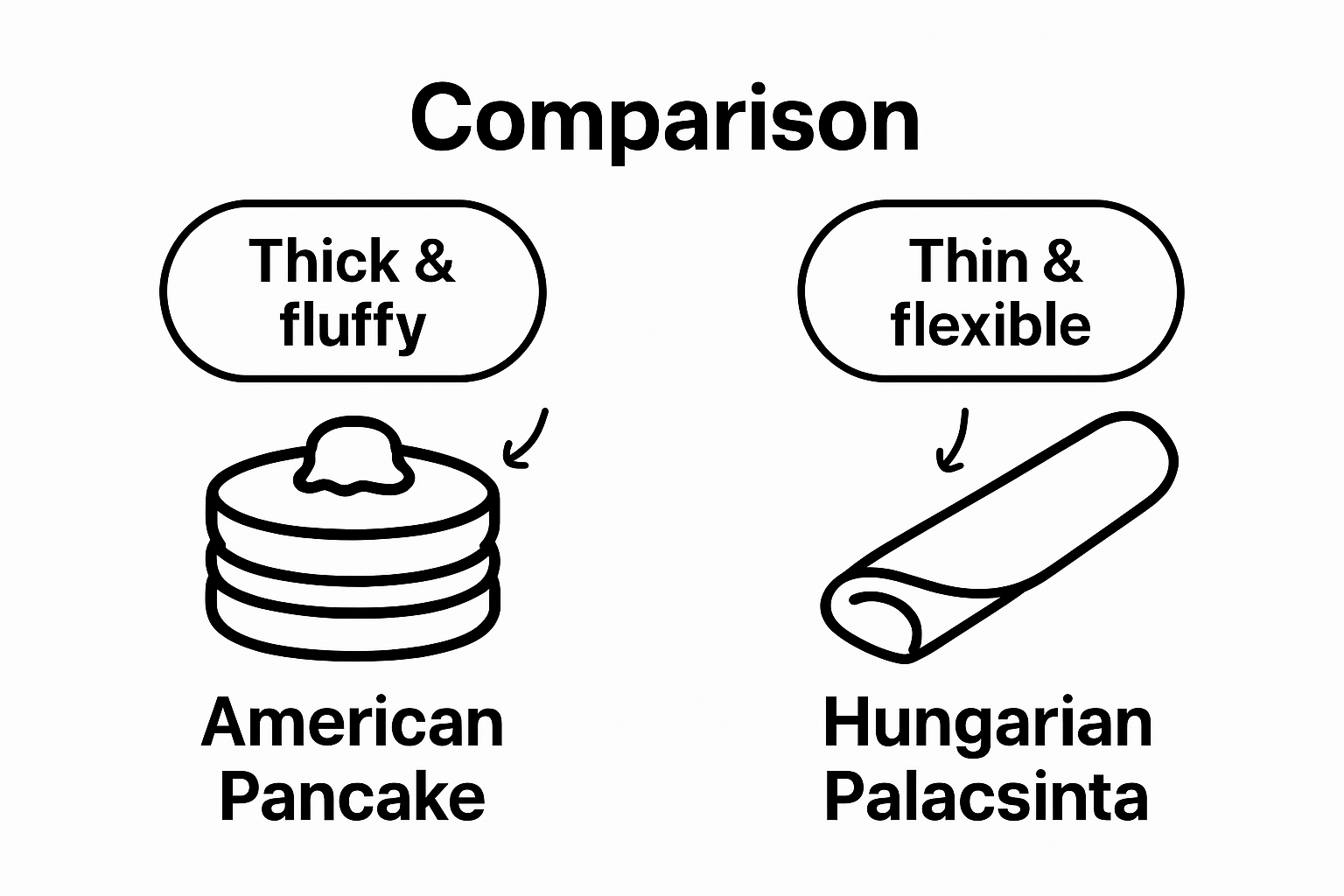
Hungarian palacsinta represents a quintessential culinary tradition that goes far beyond a simple pancake. Unlike thick American-style pancakes, this delicate dish embodies centuries of Hungarian gastronomic culture, offering a versatile canvas for both sweet and savory fillings.
To help readers quickly compare palacsinta with other well-known pancake types, this table highlights the differences between Hungarian palacsinta, American pancakes, and French crepes.
| Type | Origin | Typical Thickness | Common Uses | Typical Fillings (Examples) |
|---|---|---|---|---|
| Hungarian Palacsinta | Hungary | Paper-thin, delicate | Sweet or savory meals | Apricot jam, meat, cheese, mushrooms |
| American Pancake | United States | Thick and fluffy | Breakfast | Maple syrup, butter, fruits |
| French Crepe | France | Thin, soft | Sweet or savory meals | Nutella, ham and cheese, sugar |
What Exactly is Palacsinta?
Palacsinta is a thin, crepe-like pancake that originated in Hungarian cuisine, characterized by its light, paper-thin texture and remarkable flexibility. Prepared from a simple batter of flour, eggs, milk, and occasionally a touch of sparkling water for extra airiness, these pancakes are dramatically different from their thicker counterparts found in other cuisines.
Key characteristics of authentic Hungarian palacsinta include:
- Extremely thin and delicate consistency
- Ability to be rolled or folded with various fillings
- Versatility in serving both sweet and savory variations
- Quick preparation method requiring minimal ingredients
Cultural Significance and Preparation
In Hungarian households, palacsinta represents more than just a meal it is a cherished culinary tradition passed through generations. The dish reflects the resourcefulness of Hungarian home cooking, where simple ingredients transform into a satisfying and adaptable food. Families often gather to prepare palacsinta together, with each member contributing to the cooking process and sharing favorite filling combinations.
Traditionally, palacsinta can be filled with an extraordinary range of ingredients. Sweet versions might include jam, chocolate, ground walnuts, or sweet cottage cheese. Savory variations frequently feature meat, mushrooms, vegetables, or cheese. This incredible versatility makes palacsinta a beloved staple in Hungarian cuisine, adaptable to any meal of the day and suitable for various dietary preferences.
This table summarizes popular sweet and savory palacsinta fillings, providing a clear overview of Hungarian preferences and the dish’s impressive versatility.
| Filling Type | Example Fillings | Description |
|---|---|---|
| Sweet | Apricot jam, chocolate & walnut, cottage cheese, chestnut puree, cinnamon & sugar | Beloved dessert and breakfast choices, often creamy or fruity |
| Savory | Ground meat & paprika, mushrooms & sour cream, cheese & herbs, vegetables, liver pate & onions | Served as main courses or hearty snacks, often robust and flavorful |
According to Hungarian Culinary Traditions, palacsinta exemplifies the Hungarian approach to cooking: simple ingredients, skillful preparation, and an emphasis on flavor and flexibility.
Cultural Significance and Historical Origins of Palacsinta
The origins of palacsinta trace back to the medieval European culinary landscape, reflecting Hungary’s complex historical interactions and cultural exchanges. Discover more about Hungarian cultural traditions that have shaped this beloved dish’s evolution.
European Roots and Culinary Migration
Palacsinta emerged from a broader European pancake tradition, with roots stretching back to Roman times when thin, flat cakes became popular across the continent. Hungarian cuisine adopted and transformed these culinary techniques, creating a unique interpretation that reflected local ingredients and cooking methods.
Key historical influences on palacsinta include:
- Austrian culinary traditions during the Austro Hungarian Empire
- Turkish cooking techniques introduced during Ottoman occupation
- French cooking methods that entered Hungary through cultural exchanges
- Local agricultural practices and available ingredients
Social and Family Traditions
Beyond its culinary significance, palacsinta represents a profound social tradition in Hungarian households. Family gatherings often centered around preparing these delicate pancakes, with recipes passed down through generations. The act of making palacsinta became more than cooking it transformed into a communal ritual that reinforced family bonds and cultural identity.
The versatility of palacsinta mirrors Hungarian social dynamics its adaptability reflects the resilience and creativity of Hungarian culture. Whether served as a quick breakfast, afternoon snack, or elaborate dinner course, these pancakes symbolize the Hungarian ability to transform simple ingredients into something extraordinary.
According to Hungarian Cultural Anthropology Studies, palacsinta embodies more than a meal it represents a living connection to Hungary’s rich cultural heritage, demonstrating how food serves as a powerful medium for preserving and expressing national identity.
Different Varieties and Fillings of Palacsinta
Palacsinta’s extraordinary versatility transforms it from a simple pancake into a culinary chameleon, offering an incredible range of flavor combinations. Explore more Hungarian sweet treats to understand the diversity of Hungarian desserts and savory dishes.
Sweet Palacsinta Varieties
Sweet palacsinta represents a delightful spectrum of flavor profiles that showcase Hungarian culinary creativity. These variations demonstrate how a simple pancake can become a canvas for intricate and delectable fillings.
Popular sweet palacsinta fillings include:
- Apricot jam traditional and deeply beloved
- Chocolate and ground walnut rich and indulgent
- Sweet cottage cheese creamy and classic
- Chestnut puree seasonal and distinctive
- Cinnamon and sugar simple yet satisfying
Savory Palacsinta Transformations
Savory palacsinta equally showcases Hungarian culinary ingenuity, offering robust and complex flavor combinations that elevate the humble pancake into a substantial meal. These versions often serve as main courses, demonstrating the dish’s remarkable adaptability.
Notable savory variations feature fillings such as:
- Seasoned ground meat with paprika
- Mushroom and sour cream combinations
- Cheese and herb mixtures
- Vegetable medleys with local spices
- Liver pate with caramelized onions
According to Hungarian Culinary Research Institute, palacsinta’s diversity reflects the complex cultural interactions that have shaped Hungarian gastronomy, transforming a simple recipe into a profound culinary expression of national identity.
The Role of Palacsinta in Hungarian Cuisine and Celebrations
Palacsinta transcends its status as a mere dish, emerging as a profound cultural symbol that represents Hungarian hospitality, creativity, and familial connections. Learn more about traditional Hungarian street food to understand the broader context of Hungarian culinary traditions.
Culinary Versatility and Social Significance
In Hungarian culture, palacsinta serves multiple roles beyond nourishment. It functions as a social connector, a versatile meal option, and a canvas for culinary expression. Whether prepared for a quick family breakfast, an elaborate dinner party, or a festive celebration, palacsinta adapts seamlessly to various social contexts.
Key social functions of palacsinta include:
- Facilitating family gatherings and intergenerational cooking traditions
- Providing an economical and flexible meal solution
- Offering a platform for culinary creativity
- Representing hospitality and warmth in Hungarian households
- Serving as a teaching tool for passing down cooking skills
Celebrations and Festive Contexts
Palacsinta plays a significant role in Hungarian celebrations, appearing in both informal family settings and more structured social events. During festivals, holidays, and family gatherings, these pancakes become a centerpiece of culinary traditions, symbolizing sharing, creativity, and communal joy.
To illustrate the many social and celebratory contexts where palacsinta plays a role, this table outlines key occasions and their significance in Hungarian culture.
| Occasion | Typical Role of Palacsinta | Cultural Significance |
|---|---|---|
| Sunday Family Lunch | Centerpiece dessert or main | Promotes family togetherness |
| Name Day/Birthday Parties | Special treat for guests | Symbolizes care and celebration |
| Wedding Receptions | Festive dessert option | Highlights tradition and hospitality |
| Holiday Gatherings | Shared among relatives and friends | Marks festivity and cultural continuity |
| Community/Church Events | Served to large groups | Encourages community bonding |
Typical celebratory contexts for palacsinta include:

- Sunday family lunches
- Name day and birthday parties
- Wedding receptions
- Holiday gatherings
- Community and church events
According to Hungarian Cultural Anthropology Research, palacsinta embodies more than a meal it represents a living, dynamic expression of Hungarian cultural identity, connecting past traditions with present culinary practices.
How Palacsinta Reflects Hungarian Identity and Traditions
Palacsinta emerges as more than a culinary dish it is a profound cultural narrative that encapsulates the resilience, creativity, and adaptability of Hungarian national identity. Explore the deeper context of Hungarian cultural heritage to understand the intricate layers of this national symbol.
Culinary Resilience and Cultural Adaptation
The evolution of palacsinta mirrors Hungary’s complex historical journey, reflecting the nation’s ability to absorb external influences while maintaining a distinct cultural core. From Ottoman occupations to Austro Hungarian imperial periods, each historical interaction introduced new ingredients, techniques, and flavors that were seamlessly integrated into the traditional pancake recipe.
Key elements demonstrating cultural resilience include:
- Incorporation of foreign culinary techniques
- Transformation of imported ingredients
- Preservation of core cooking methods
- Maintaining family recipe traditions
- Adapting to changing social landscapes
Symbolism of Family and Community
Palacsinta represents more than a meal it is a living embodiment of Hungarian social dynamics. The process of making these pancakes transcends mere cooking, becoming a ritualistic practice that reinforces familial bonds, transfers generational knowledge, and maintains cultural continuity.
Symbolic representations of community through palacsinta include:
- Intergenerational knowledge transfer
- Shared cooking experiences
- Expression of familial love and care
- Celebration of collective culinary creativity
- Preservation of cultural memory
According to Hungarian Anthropological Studies, palacsinta serves as a culinary metaphor for Hungarian national character resilient, flexible, and capable of absorbing diverse influences while maintaining a unique and unmistakable identity.
Discover Hungarian Palacsinta Firsthand With Expert Guidance
Have you ever been captivated by the rich history, family traditions, and culinary creativity behind Hungarian palacsinta, but wondered how you can truly experience this cultural delight for yourself? It can be overwhelming to turn your curiosity into real immersion, especially if you want to explore both authentic flavors and their deeper meanings. Many travelers struggle to move beyond recipes or pictures, seeking true hands-on enjoyment and a connection to Hungary’s vibrant food culture.
Let us help you close that gap. Our dedicated Gastronomy Archives equip you with in-depth guides on where to taste traditional palacsinta, participate in cooking workshops, and explore Hungary’s most cherished culinary experiences. For a full journey into Hungarian culture, browse the Hungary Archives for more inspiration. Start planning your authentic adventure today and turn your curiosity into memories with It’s Hungary.
Frequently Asked Questions
What is palacsinta?
Palacsinta is a thin, crepe-like pancake from Hungarian cuisine, characterized by its delicate texture and versatility in both sweet and savory fillings.
What are common fillings for sweet palacsinta?
Sweet palacsinta can be filled with ingredients such as apricot jam, chocolate and ground walnuts, sweet cottage cheese, chestnut puree, and cinnamon with sugar.
How is palacsinta traditionally served in Hungary?
In Hungary, palacsinta is often served as a breakfast dish, a dessert, or even as a main course. It is a popular choice for family gatherings and celebrations, symbolizing hospitality and warmth.
How does palacsinta reflect Hungarian culture?
Palacsinta embodies the adaptability and resilience of Hungarian culture, representing a communal cooking tradition where families come together to prepare the dish, while also showcasing the influence of historical culinary exchanges.