Paprika spices up kitchens all over the world but most people only know it as the red dust sprinkled on deviled eggs. Here is the shocker. Hungarian paprika comes in eight official types, each with its own signature flavor. That fiery powder is not just for color it is a whole universe of taste that turns basic recipes into something legendary.
Table of Contents
- Exploring The Flavor Profile Of Paprika
- The Different Types Of Paprika And Their Tastes
- Cultural Significance Of Paprika In Hungarian Cuisine
- How Paprika Enhances Dishes: Flavor And Aroma
- The Science Behind Paprika’s Unique Taste
Quick Summary
| Takeaway | Explanation |
|---|---|
| Paprika has diverse flavor profiles. | Paprika’s taste varies widely from sweet and mild to intensely smoky, depending on the pepper variety and processing methods. |
| Different types of paprika serve unique culinary roles. | Sweet, hot, and smoked paprika can enhance various dishes in distinct ways, contributing unique flavors to recipes. |
| Processing techniques affect flavor intensity. | Drying and grinding methods influence the paprika’s taste, with smoked varieties providing more intense flavors than sun-dried ones. |
| Hungarian paprika is culturally significant. | Beyond its flavor, paprika is a vital part of Hungary’s culinary identity, featured in iconic dishes like goulash and chicken paprikash. |
| Understanding paprika’s chemistry enhances cooking. | Knowledge of volatile compounds and thermal reactions in paprika can help chefs utilize the spice more effectively in their culinary creations. |
Exploring the Flavor Profile of Paprika
Paprika is a ground spice derived from dried red peppers of the Capsicum annuum species, offering a complex and nuanced flavor profile that ranges from sweet and mild to intensely smoky. Discover more about Hungarian spice traditions.
The Fundamental Flavor Characteristics
The taste of paprika is dramatically influenced by its variety, processing method, and the specific type of pepper used. According to research in the journal Molecules, paprika’s flavor can be categorized into several key dimensions:
- Sweet Paprika: Mild and fruity, with a gentle warmth and minimal heat
- Hot Paprika: Sharp and spicy, delivering a more intense peppered sensation
- Smoked Paprika: Rich and robust, with a deep, complex smoky undertone
Flavor Intensity and Regional Variations
The flavor intensity of paprika varies significantly depending on its origin. Hungarian paprika, renowned worldwide, offers a particularly rich and nuanced taste profile. American paprika tends to be milder and sweeter, while Spanish and Mediterranean varieties often feature more pronounced smoky or spicy notes.
The pepper’s ripeness during harvest, drying techniques, and grinding methods all contribute to the final flavor. Carefully controlled processing ensures that each paprika type maintains its unique sensory characteristics, transforming simple dried peppers into a spice with remarkable depth and complexity.
The Different Types of Paprika and Their Tastes
Paprika comes in multiple varieties, each offering a unique flavor profile that transforms dishes with its distinctive characteristics. Learn about traditional Hungarian spice techniques that make these variations possible.
Classic Paprika Categories
According to the Institute of Culinary Education, paprika can be classified into three primary types:
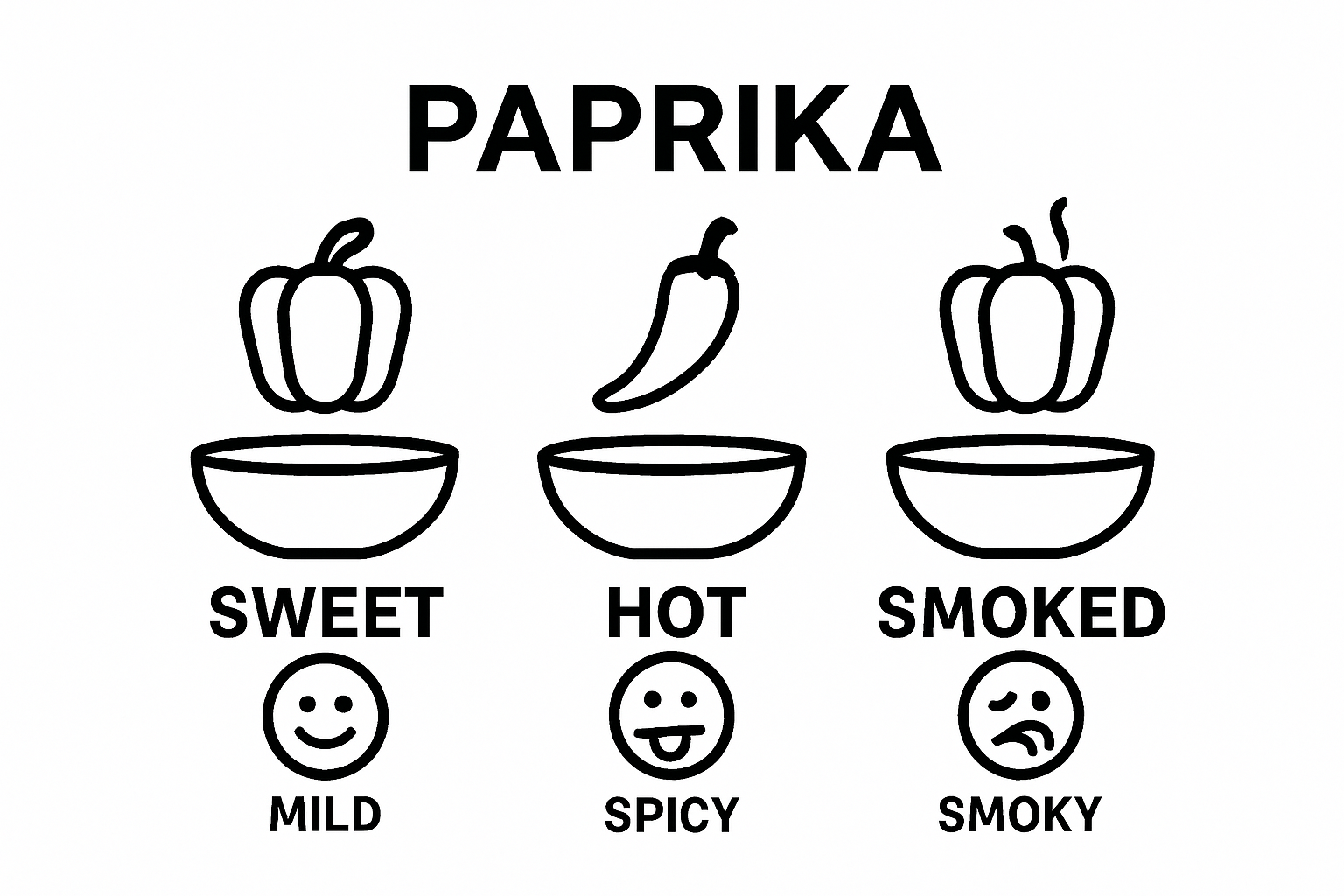
- Sweet Paprika: Mild and earthy, made from ripe red peppers without seeds
- Hot Paprika: Intense and spicy, incorporating pepper seeds for added heat
- Smoked Paprika: Deep and robust, created by drying peppers over wood smoke
Regional Flavor Distinctions
Different regions produce paprika with remarkable variations. Hungarian paprika stands out with its extraordinary complexity, featuring eight official classifications ranging from extremely mild to intensely hot. Spanish paprika often delivers a more pronounced smoky flavor, while American varieties tend to be milder and more neutral.
The flavor nuances emerge from critical production factors: pepper variety, ripeness at harvest, drying techniques, and grinding methods. Careful processing transforms simple dried peppers into a spice with extraordinary sensory depth, allowing chefs and home cooks to select precisely the right paprika for their culinary vision.
To help readers compare the key types of paprika described in the article, the following table organizes their main flavor characteristics and production differences.
| Type of Paprika | Main Flavor Profile | Production Method | Common Culinary Uses |
|---|---|---|---|
| Sweet Paprika | Mild, earthy, fruity | Made from ripe red peppers; no seeds | Stews, soups, sauces |
| Hot Paprika | Sharp, spicy, intense | Includes pepper seeds | Spicy sauces, adding heat to dishes |
| Smoked Paprika | Deep, robust, smoky | Dried over wood smoke | Grilled meats, paella, smoky flavor dishes |
| Hungarian Paprika | Complex, varies (mild to hot) | Detailed grinding and blending | Hungarian dishes (goulash, paprikash) |
| Spanish Paprika | Smoky, often spicy | Typically smoked, some sweet types | Spanish cuisines, chorizo, rice dishes |
| American Paprika | Milder, sweet, less intense | Simple drying, little to no smoke | Garnish, deviled eggs, general seasoning |
Cultural Significance of Paprika in Hungarian Cuisine
Paprika transcends being merely a spice in Hungary it is a cultural cornerstone that defines national culinary identity. Explore traditional Hungarian cooking methods that have elevated this remarkable ingredient.
Historical Roots and Culinary Evolution
According to the Smithsonian Festival Research, paprika’s journey in Hungarian cuisine is deeply rooted in historical traditions. In the nineteenth century, paprika powder transformed traditional dishes like goulash and halászlé (fish soup), becoming an essential flavor enhancer that distinguished Hungarian cooking from other European cuisines.
Iconic Dishes and Regional Variations
Paprika plays a pivotal role in numerous iconic Hungarian dishes:
- Goulash: A hearty beef stew where paprika provides depth and warmth
- Chicken Paprikash: A creamy dish highlighting paprika’s ability to create rich, complex flavors
- Lecsó: A vegetable stew showcasing paprika’s versatility in vegetarian cooking
The regions of Kalocsa and Szeged are particularly renowned for producing the highest quality paprika, with unique microclimates that contribute to the spice’s exceptional flavor profile. Hungarian chefs consider paprika not just an ingredient, but a culinary art form, carefully selecting and using different paprika varieties to create nuanced and extraordinary dishes that represent centuries of gastronomic tradition.
How Paprika Enhances Dishes: Flavor and Aroma
Paprika is more than a simple seasoning it is a transformative culinary ingredient that adds remarkable depth and complexity to dishes. Uncover the secrets of Hungarian spice mastery to understand its extraordinary potential.
Aromatic Compounds and Flavor Complexity
According to research published in the journal Molecules, paprika’s flavor profile is composed of intricate volatile compounds that contribute distinctive sensory characteristics:
- Citrus Notes: Derived from limonene, providing bright, fresh undertones
- Woody Aromas: Emerging from furfural compounds, adding earthy depth
- Green Essences: Contributed by terpenes, creating subtle herbal nuances
Culinary Applications and Sensory Impact
The drying and grinding process significantly influences paprika’s flavor intensity. Different processing techniques create variations that can dramatically transform a dish’s sensory experience. Smoked paprika introduces intense, persistent smoky notes, while sun-dried varieties offer more delicate, straw-like subtleties. Hungarian chefs understand that selecting the right paprika type can elevate a simple recipe into a complex culinary masterpiece, using the spice not just for flavor but as a fundamental component of gastronomic storytelling.
The Science Behind Paprika’s Unique Taste
Paprika’s extraordinary flavor complexity emerges from intricate biochemical interactions that transform simple dried peppers into a culinary marvel. Discover the fascinating world of Hungarian spice science and unravel the molecular secrets behind this remarkable spice.
Volatile Compound Composition
According to research published in the National Center for Biotechnology Information, paprika’s flavor profile is a sophisticated symphony of volatile compounds:
- Terpenes: Responsible for subtle herbal and green notes
- Phenols: Contributing to smoky and intense flavor characteristics
- Aldehydes: Generating fruity and fresh aromatic undertones
Thermal Transformation and Flavor Development
Heating triggers remarkable chemical reactions within paprika powder, particularly the Maillard reaction, which creates complex flavor molecules. This process transforms simple pepper compounds into rich, multidimensional taste sensations. The precise temperature, duration of heating, and original pepper variety all play crucial roles in developing paprika’s final flavor profile. Hungarian spice masters have long understood these scientific principles, carefully controlling every aspect of paprika production to maximize its sensory potential and create a spice that is far more than a simple seasoning.
This table summarizes the main aromatic compounds found in paprika, highlighting their contribution to its unique flavor as explained in the science and flavor profile sections.
| Compound Type | Contribution to Flavor | Sensory Note Produced |
|---|---|---|
| Terpenes | Subtle herbal, green undertones | Herbal, green |
| Phenols | Smoky, intense depth | Smoky, deep |
| Aldehydes | Fruity, fresh aromatic character | Fruity, citrusy |
| Limonene | Bright, uplifting undertones | Citrus |
| Furfural | Earthy, woody nuance | Woody |
Discover the True Taste of Hungary With Paprika Experiences
If learning about the unique flavors of paprika has sparked your curiosity, imagine tasting authentic paprika dishes in the heart of Hungary. Understanding paprika’s flavor profile is just the beginning. Many travelers struggle to go beyond textbook knowledge. They often want a real experience that awakens their senses and helps them connect with Hungarian culture firsthand.
Why just read about Hungarian paprika when you can indulge in its full spectrum of flavors yourself? Take your journey a step further with It’s Hungary, where you can explore authentic culinary traditions and find travel inspiration for your next adventure. We curate top sights, local dining tips, and insider guides so you can experience every nuance of Hungary’s food scene. If you want a memorable trip filled with delicious discoveries, start planning now with us for a truly immersive getaway.
Frequently Asked Questions
What are the different types of paprika and how do they taste?
Paprika comes in several varieties, with the three primary types being sweet paprika, hot paprika, and smoked paprika. Sweet paprika is mild and earthy, hot paprika is intense and spicy, while smoked paprika has a rich, robust flavor due to the drying process over wood smoke.
How does the origin of paprika affect its flavor?
The origin of paprika significantly influences its flavor profile. Hungarian paprika is renowned for its complexity and rich taste, while American paprika tends to be milder and sweeter. Spanish varieties often have a more pronounced smoky or spicy note, showcasing the diverse flavor characteristics associated with different regions.
How can I enhance my dishes using paprika?
To enhance dishes, choose the right type of paprika based on the desired flavor profile. Sweet paprika can add depth to stews, hot paprika can spice up sauces, and smoked paprika can introduce a unique smoky richness to various recipes. Understanding these nuances can elevate your culinary creations.
What chemical compounds contribute to paprika’s unique taste?
Paprika’s flavor complexity arises from various volatile compounds, including terpenes, phenols, and aldehydes. These compounds generate distinct taste sensations, such as earthy depth and fruity undertones, making paprika a multifaceted spice that enhances a wide range of dishes.