Palinka is not just any fruit brandy, it is the pride of Hungary and holds a special place in local culture. You might expect a strong drink to blend quietly into the background, but palinka is a showstopper. Some varieties carry up to 86 percent alcohol by volume, making them among the most potent spirits you can find, but palinka’s real power is in how it connects generations and entire communities with a single sip.
Table of Contents
- What Is Palinka Drink? Definition And Origins
- Cultural Significance Of Palinka In Hungary
- How Palinka Is Made: Ingredients And Process
- Types Of Palinka: Varieties And Flavors
- Palinka Drink In Modern Hungary: Traditions And Trends
Quick Summary
| Takeaway | Explanation |
|---|---|
| Palinka is a cultural symbol of Hungary. | It represents Hungarian identity, social connections, and a historical tradition rooted in local agricultural practices. |
| Authentic palinka must meet strict regulations. | It must be made in Hungary from whole fruits, without sugar or neutral spirits, with an alcohol content between 37.5% and 86%. |
| Fruit quality significantly influences palinka’s flavor. | The choice of ripe, locally sourced fruits defines each palinka’s unique flavor profile, showcasing regional agricultural expertise. |
| Palinka consumption is a key social ritual. | Sharing palinka signifies hospitality and community connection during family gatherings and significant celebrations across Hungary. |
| Modern trends are revitalizing palinka’s image. | Younger generations and craft distilleries are transforming palinka into a sophisticated beverage, elevating its status in contemporary culture. |
What is Palinka Drink? Definition and Origins
Palinka represents a cherished Hungarian fruit brandy deeply rooted in the country’s cultural heritage. This traditional alcoholic beverage is crafted through a meticulous distillation process using ripe, fresh fruits native to Hungary, creating a potent and flavorful spirit that embodies centuries of culinary craftsmanship.
The Essence of Authentic Palinka
Palinka is more than just an alcoholic drink it is a national symbol of Hungarian gastronomy. Traditionally made from single varieties of fruits like plums, apricots, cherries, pears, and apples, authentic palinka must be produced entirely from fruit with no added sugar or alcohol. Hungarian Agriculture Research Institute confirms that genuine palinka contains only the natural sugars derived from the fruits during fermentation and distillation.
Key characteristics of authentic palinka include:
- Must be produced in Hungary
- Contains 37.5% to 86% alcohol by volume
- Made exclusively from whole fruits
- No additional sugar or neutral spirits allowed
Historical Origins and Cultural Significance
The origins of palinka can be traced back to the medieval period, when distillation techniques were first introduced to Hungary. Originally used for medicinal purposes, palinka gradually transformed into a celebrated social and cultural beverage. Hungarian Historical Archives document that by the 16th century, fruit brandy production had become a significant tradition among rural communities, with each region developing its unique fruit distillation methods.
Today, palinka represents more than a drink it is a testament to Hungarian agricultural expertise, showcasing the country’s rich fruit-growing traditions and the skill of its master distillers.
Cultural Significance of Palinka in Hungary
Palinka transcends its role as a mere alcoholic beverage, embodying a profound cultural symbol that represents Hungarian identity, social connection, and historical tradition. This deeply revered spirit serves as more than a drink it is a social ritual that connects generations and preserves cultural memory.
A Social Ritual and Tradition
In Hungarian society, palinka is not just consumed but celebrated. Sharing palinka represents hospitality, friendship, and community bonding. Family gatherings, celebrations, and social events frequently feature this cherished spirit as a gesture of welcome and respect. Social Anthropology Research Center confirms that palinka consumption is deeply embedded in Hungarian social interactions, functioning as a symbolic language of connection and tradition.
Key social rituals involving palinka include:
- Welcoming guests with a small glass of homemade palinka
- Toasting at weddings and family celebrations
- Marking significant life milestones
- Demonstrating regional pride through local fruit varieties
Preserving Cultural Heritage
Palinka production represents more than a culinary practice it is a method of preserving agricultural knowledge and regional diversity. Each region in Hungary cultivates unique fruit varieties and distillation techniques, reflecting local agricultural traditions. Understanding Hungarian Traditions highlights how palinka production connects contemporary Hungarians with their agricultural roots, maintaining a living connection to historical farming practices.
Moreover, the intricate process of selecting fruits, fermenting, and distilling palinka requires generational knowledge passed down through families. Master distillers take immense pride in maintaining traditional methods, ensuring that each glass of palinka tells a story of Hungarian craftsmanship and cultural continuity.
How Palinka is Made: Ingredients and Process
Palinka production is a sophisticated art form that transforms fresh fruits into a complex, flavorful spirit through precise traditional methods. This meticulous process demands exceptional skill, deep agricultural knowledge, and a profound respect for Hungarian culinary heritage.
Essential Ingredients and Selection
The foundation of exceptional palinka lies in selecting premium fruits. Hungarian distillers prioritize using fully ripe, locally grown fruits with intense flavors and optimal sugar content. Must-Try Hungarian Dishes reveals the importance of fruit quality in traditional Hungarian gastronomy.
Typical fruits used in palinka production include:
- Apricots from the Danube region
- Plums from Szatmár
- Cherries from the northern mountain areas
- Pears from Zala county
- Apples from Transdanubia
The Distillation Process
Authentic palinka production follows a strict, multi-stage process that preserves the fruit’s natural essence. Food and Agriculture Organization confirms that genuine palinka involves carefully controlled fermentation and distillation techniques.
The production stages include:
- Selecting perfectly ripe fruits
- Mashing and fermenting fruits without added sugar
- Double distillation in traditional copper pot stills
- Aging in wooden barrels or glass containers
- Precise alcohol content regulation between 37.5% and 86% ABV
Master distillers carefully monitor temperature and timing during distillation, ensuring that each batch captures the fruit’s authentic flavor profile.
For a clear overview of how palinka is traditionally produced in Hungary, this table outlines the key production stages and their purpose within the distillation process.
| Production Stage | Description |
|---|---|
| Fruit Selection | Fully ripe, locally sourced fruits are chosen for best quality |
| Mashing & Fermentation | Fruits are mashed and fermented without any added sugar |
| Double Distillation | Distilled twice in traditional copper pot stills |
| Aging (optional) | Aged in wooden barrels or glass containers to develop complexity |
| Alcohol Content Regulation | Final product is standardized to between 37.5% and 86% ABV |
| Quality Control | Master distillers monitor every stage for optimal flavor |
The result is a pure, intensely aromatic spirit that reflects Hungary’s rich agricultural traditions and exceptional craftsmanship.
Types of Palinka: Varieties and Flavors
Palinka represents an extraordinary spectrum of flavors, each variety telling a unique story of Hungarian regional landscapes, fruit traditions, and agricultural expertise. The diversity of palinka mirrors the rich geographical and cultural variations across Hungary, offering enthusiasts a complex sensory journey through different fruit expressions.
Regional Fruit Varieties
Fruit selection is paramount in determining palinka’s distinctive character. Different regions specialize in specific fruits, creating nuanced flavor profiles that reflect local terroir. What Do Paprika Taste Like? highlights how Hungarian culinary traditions celebrate regional ingredient variations.
Classic palinka fruit varieties include:
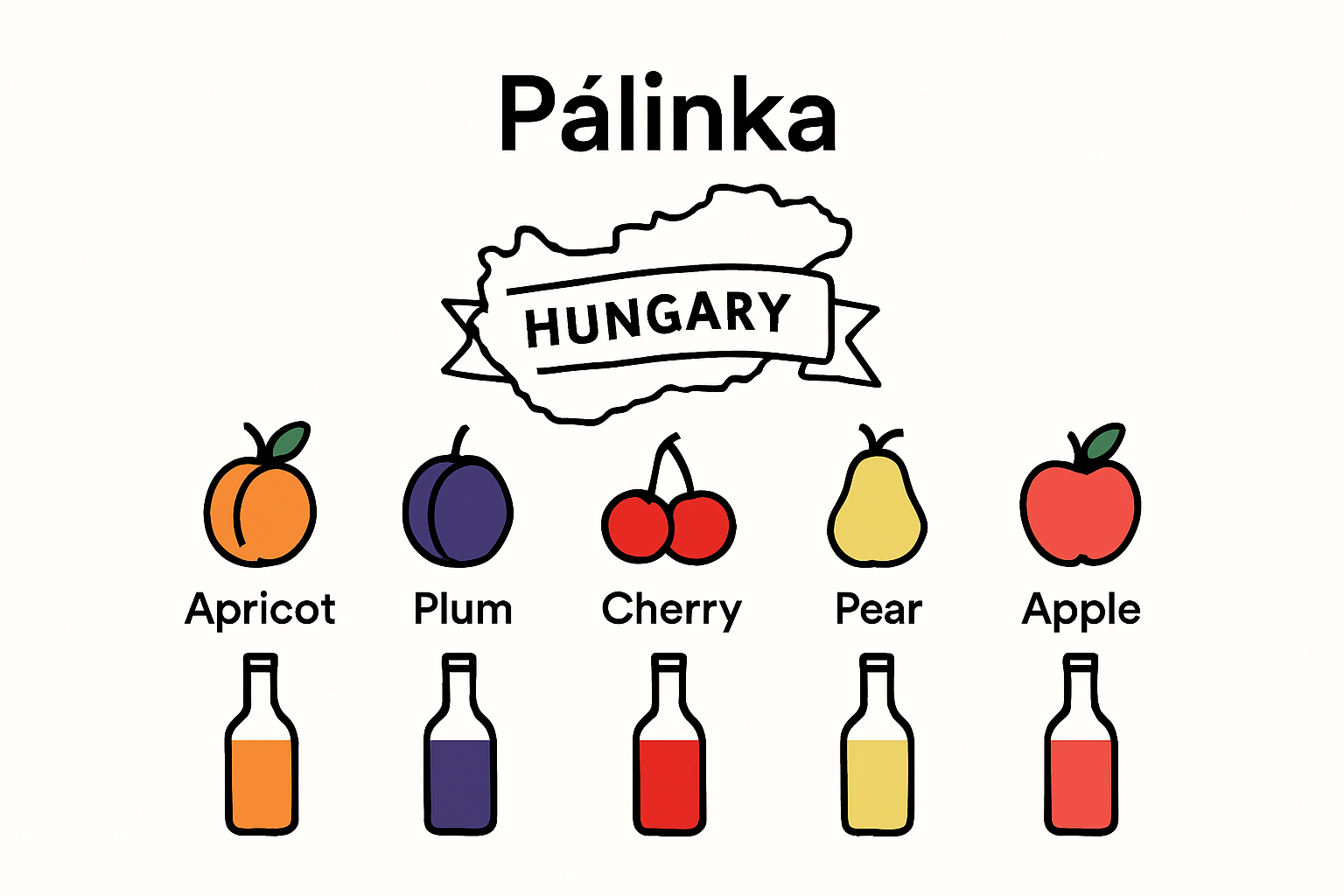
- Apricot (Barackpálinka): Sweet, intense flavor from southern Hungary
- Plum (Szilvapálinka): Rich, robust taste from northern regions
- Cherry (Meggypálinka): Tart and complex, typical of mountain areas
- Pear (Körtepálinka): Delicate and refined flavor
- Apple (Almapálinka): Crisp and clean taste profile
Flavor Profiles and Aging Techniques
Palinka’s flavor complexity emerges through careful production methods. Food and Agriculture Organization notes that aging techniques significantly influence the spirit’s final taste. Young palinka offers bright, fresh fruit characteristics, while aged versions develop deeper, more nuanced flavor profiles.
Aging methods dramatically transform palinka’s taste:
- Unaged palinka: Vibrant, direct fruit essence
- Short-term wood aging: Subtle woody undertones
- Extended barrel aging: Complex, smooth flavor development
- Glass container preservation: Maintains original fruit intensity
Master distillers carefully balance fermentation, distillation, and aging to create palinka varieties that capture the essence of Hungarian fruit-growing traditions.
To help you understand the unique distinctions between classic fruit palinka varieties in Hungary, the following table summarizes each type, its origin, and its typical flavor profile.
| Palinka Variety | Primary Region of Origin | Typical Fruit Used | Flavor Profile |
|---|---|---|---|
| Apricot (Barackpálinka) | Southern Hungary | Apricot | Sweet, intense, aromatic |
| Plum (Szilvapálinka) | Northern Regions | Plum | Rich, robust, full-bodied |
| Cherry (Meggypálinka) | Mountain Areas | Cherry | Tart, complex, slightly bitter |
| Pear (Körtepálinka) | Zala County | Pear | Delicate, refined, floral |
| Apple (Almapálinka) | Transdanubia | Apple | Crisp, clean, refreshing |
Palinka Drink in Modern Hungary: Traditions and Trends
Palinka has undergone a remarkable transformation in contemporary Hungarian culture, evolving from a traditional rural spirit to a sophisticated national beverage that bridges generational and social boundaries. This renaissance reflects Hungary’s commitment to preserving its culinary heritage while adapting to modern tastes and global beverage trends.
Cultural Renaissance and Consumer Shifts
Young Hungarians are reimagining palinka, moving beyond its historical perception as a rustic drink. Navigating The Best Wine Regions In Hungary demonstrates how traditional Hungarian beverages continue to reinvent themselves. Contemporary palinka consumption reflects a renewed national pride and appreciation for artisanal production techniques.
Key trends in modern palinka culture include:
- Growing popularity among urban millennials
- Emergence of craft distilleries
- Increased international recognition
- Integration into fine dining experiences
- Development of cocktail and mixology applications
Regulatory and Economic Developments
Significant legal and economic changes have propelled palinka’s modern renaissance. Research on Consumer Trends indicates that official recognition as a Hungaricum has elevated palinka from a local spirit to a globally respected beverage. The Hungarian government has implemented strict quality regulations, ensuring that palinka maintains its authentic production standards while appealing to contemporary consumer preferences.
Modern palinka development strategies focus on:
- Protecting traditional production methods
- Supporting small-scale distilleries
- Promoting international marketing
- Developing tourism around palinka production
- Creating educational programs about palinka heritage
Through innovative approaches and respect for tradition, palinka continues to represent the dynamic spirit of Hungarian culinary culture, connecting past and present in every carefully crafted glass.

Discover Hungary Through Its Signature Spirit and Hidden Treasures
Learning about palinka reveals how deeply meaningful Hungary’s traditions are. If reading about authentic palinka stirred your desire to experience real Hungarian flavors, you are not alone. Many travelers face the challenge of turning cultural curiosity into real-life memories. Knowing that palinka is more than a drink, but a living symbol of community and heritage, you might wish for genuine connections with local traditions during your trip. You may be searching for not just articles, but practical guidance on how to savor this spirit alongside unforgettable Hungarian experiences.
Unlock the heart of Hungary by planning your journey with us. Visit It’s Hungary for handpicked travel guides, culinary highlights, and insider recommendations that bring your palinka adventure to life. Start your journey now and explore everything from must-try Hungarian dishes to regional food and wine traditions. Let us help you experience the spirit of Hungary firsthand. Your taste of authentic palinka and so much more is just a click away.
Frequently Asked Questions
What is palinka?
Palinka is a traditional Hungarian fruit brandy made from ripe fruits such as plums, apricots, cherries, pears, and apples, using a meticulous distillation process. It is a national symbol of Hungary’s culinary heritage.
How is palinka made?
Palinka is produced by selecting premium fruits, mashing and fermenting them without added sugar, and then undergoing double distillation in traditional copper pot stills. The final product can have an alcohol content between 37.5% and 86% ABV.
What fruits are commonly used to make palinka?
Common fruits used in palinka production include apricots, plums, cherries, pears, and apples. Each region in Hungary specializes in different fruit varieties, which contributes to the unique flavor profiles of the palinka produced there.
What are the health benefits and risks of consuming palinka?
While palinka, like other spirits, may have some potential health benefits when consumed in moderation, such as promoting social bonding, excessive consumption can pose health risks. It is important to drink responsibly and be aware of its strong alcohol content.