Hungarian goulash is all about tradition and comfort, known for its rich paprika flavor and hearty portions that bring people together. You might guess the star is just the stew itself, loaded with tender meat and vegetables. But the real magic comes from its classic accompaniments, like nokedli dumplings and tangy cucumber salad. Nokedli dumplings have been served with goulash for centuries, making them the top choice among Hungarian families. Most people never realize how much these simple sides define the meal, giving you textures and flavors that transform every bowlful into an authentic feast.
Table of Contents
- Step 1: Identify Traditional Accompaniments
- Step 2: Prepare Side Dishes for Flavor Balance
- Step 3: Select Complementary Beverages
- Step 4: Incorporate Local Bread Options
- Step 5: Consider Salad Pairings for Freshness
Quick Summary
| Key Point | Explanation |
|---|---|
| 1. Select traditional accompaniments | Use nokedli, crusty bread, and potatoes to complement goulash’s robust flavors. |
| 2. Prepare side dishes with care | Focus on texture and taste balance; aim for light, fluffy nokedli and crispy potatoes for contrast. |
| 3. Choose appropriate beverages | Pair goulash with robust red wines or traditional pálinka to enhance the dining experience. |
| 4. Incorporate local bread | Use Hungarian peasant bread to absorb the sauce and provide a hearty, flavorful element to the meal. |
| 5. Add fresh salads for contrast | Include cucumber salad or other fresh salads to cleanse the palate and balance the heaviness of goulash. |
Step 1: Identify Traditional Accompaniments
Understanding the traditional accompaniments for Hungarian goulash is crucial to creating an authentic dining experience that honors the rich culinary heritage of Hungary. Traditional goulash is more than just a hearty meat stew – it’s a complete meal with carefully selected side dishes that complement its robust flavors and hearty texture.
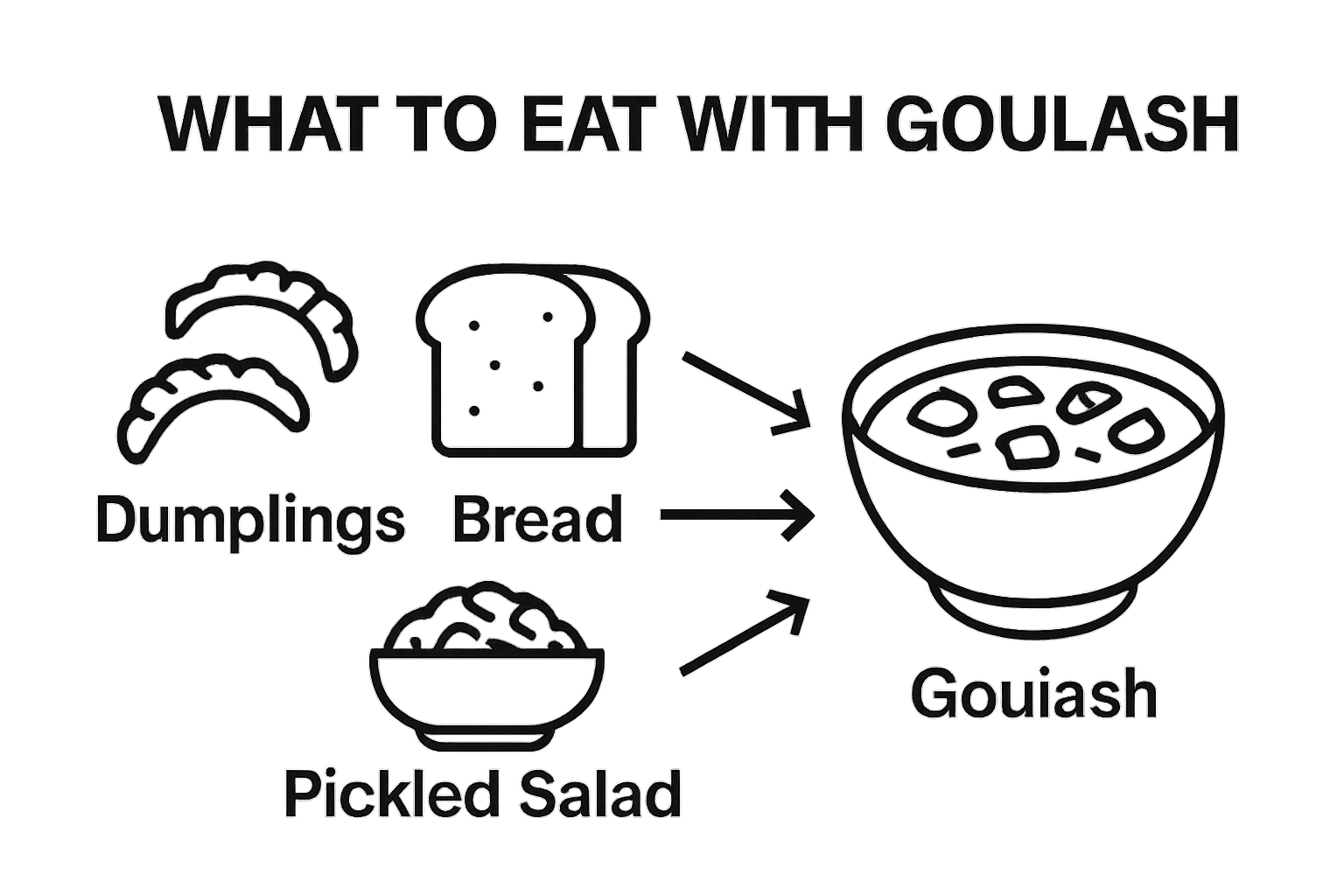
Hungarian cuisine has developed these accompaniments over centuries, ensuring that each element on the plate serves a specific purpose. Nokedli, also known as Hungarian egg noodle dumplings, stands as the most classic side dish for goulash. These small, irregular-shaped dumplings are made from a simple mixture of flour, eggs, and water, providing a perfect vehicle for soaking up the rich, paprika-infused sauce.
In addition to nokedli, crusty bread plays a significant role in enjoying goulash. Authentic Hungarian bread, with its dense texture and crisp crust, allows diners to mop up every last drop of the savory sauce. According to traditional Hungarian culinary experts, bread is not just a side item but an integral part of the dining experience.
For those seeking variety, potatoes offer another excellent accompaniment. Boiled or roasted potatoes can provide a hearty base that complements the meat and sauce. Some regions prefer csipetke, tiny pinched noodle dumplings that add texture and substance to the meal.
When selecting accompaniments, consider these key characteristics:
- Texture contrast: Choose sides that provide a different mouthfeel from the stew
- Flavor absorption: Select items that can soak up the rich sauce
- Cultural authenticity: Prioritize traditional Hungarian side dishes
By carefully selecting these traditional accompaniments, you transform a simple stew into a complete, satisfying Hungarian culinary experience that connects you directly to generations of cooking traditions.
To help you choose the ideal accompaniments, here’s a comparison of traditional side dishes commonly served with Hungarian goulash, including their textures and key features.
| Side Dish | Texture | Key Features |
|---|---|---|
| Nokedli (egg dumplings) | Light, fluffy | Absorbs sauce, traditional, staple pairing |
| Crusty Hungarian bread | Dense, crispy | Mops up sauce, adds hearty texture |
| Boiled or roasted potatoes | Soft (boiled), crisp outside (roasted) | Adds substance, contrasts with stew |
| Csipetke (pinched dumplings) | Firm, chewy | Regional choice, small noodle texture |
| Zsemle (white roll) | Soft, delicate | Light alternative to dense bread |
Step 2: Prepare Side Dishes for Flavor Balance
Balancing the rich, hearty flavors of Hungarian goulash requires strategic preparation of side dishes that complement and enhance the main course. This step is about creating a harmonious culinary experience that respects the depth and complexity of traditional Hungarian cooking.
Start by focusing on nokedli, the quintessential Hungarian egg dumpling that serves as the perfect flavor carrier. To prepare authentic nokedli, you’ll need a simple mixture of flour, eggs, and water. The key is achieving a slightly sticky, elastic dough that can be quickly dropped into boiling salted water. Your dumplings should be small and irregular, mimicking the rustic tradition of homemade Hungarian cooking. Work the dough with gentle hands, allowing small pieces to fall directly into the boiling water, creating those characteristic bite sized dumplings that absorb the goulash sauce beautifully.
Research from Hungarian culinary traditions emphasizes the importance of using high-quality ingredients and maintaining traditional preparation methods. When preparing your side dishes, consider how each element will interact with the rich, paprika-infused goulash. Roasted potatoes offer an alternative starch option, providing a crisp exterior and soft interior that contrasts wonderfully with the tender meat in the stew.
If you want to add complexity to your meal, consider preparing a simple cucumber salad or pickled vegetables. These acidic, fresh sides cut through the heaviness of the goulash, creating a balanced dining experience. The tangy pickles provide a sharp contrast to the deep, warming flavors of the stew, cleansing the palate between bites.
Verify your side dish preparation by checking these key indicators:
- Nokedli are light and fluffy, not dense or gummy
- Potatoes have a golden, crisp exterior
- Pickled sides offer a bright, acidic counterpoint to the rich stew
Remember that side dishes are not mere afterthoughts but integral components of the Hungarian dining experience. Each element should contribute to a symphony of flavors that celebrates the rich culinary heritage of this remarkable cuisine.
Use this checklist to verify your side dish preparation and ensure a balanced, authentic Hungarian goulash meal.
| Side Dish | Preparation Indicator | Ready When |
|---|---|---|
| Nokedli | Light and fluffy, not dense or gummy | Dumplings float and hold their shape |
| Potatoes | Golden, crisp exterior | Edges are browned and flesh is tender |
| Pickled Sides | Bright, acidic flavor | Vegetables remain crisp and tangy |
| Bread | Dense crumb, crisp crust | Holds up to sauce, retains structure |
| Salad | Vegetables are crisp and fresh | Flavors are balanced and palate-cleansing |
Step 3: Select Complementary Beverages
Selecting the right beverage to accompany Hungarian goulash transforms a good meal into an extraordinary culinary experience. The robust, hearty nature of goulash demands a drink that can stand up to its intense flavors while providing a complementary sensory journey.
Red wines emerge as the premier choice for pairing with goulash. Hungarian wines, particularly those from the Villány region, offer exceptional options. Look for full-bodied red wines with enough complexity to match the stew’s rich, paprika-infused profile. Bull’s Blood (Egri Bikavér), a legendary Hungarian red wine, provides an authentic local option that beautifully mirrors the depth of traditional goulash.
According to Hungarian culinary experts, native beverages like pálinka – a traditional fruit brandy – can also serve as an excellent accompaniment. Apricot or plum pálinka offers a sharp, clean contrast to the stew’s heavy texture, cleansing the palate between hearty bites. The spirit’s intense fruit notes cut through the richness of the meat, creating a balanced drinking experience.
For those preferring non-alcoholic options, consider robust beverages that can withstand goulash’s powerful flavor profile. Dark beer or herbal teas provide interesting alternatives. A malty, slightly bitter dark beer can complement the meat’s richness, while a strong black tea with hints of smoke can mirror the stew’s warming qualities.
When selecting your beverage, consider these critical pairing principles:
- Match the beverage’s intensity with the dish’s flavor complexity
- Seek drinks that provide either complementary or contrasting taste profiles
- Prioritize local Hungarian beverages for an authentic experience
Ultimately, the perfect beverage pairing should enhance the goulash, creating a harmonious dining experience that celebrates the nuanced traditions of Hungarian cuisine. Trust your palate and be willing to experiment with different combinations to discover your ideal match.
Step 4: Incorporate Local Bread Options
Bread is not merely a side item in Hungarian cuisine but a fundamental component that completes the goulash dining experience. The right bread can transform your meal, providing texture, absorbing the rich sauce, and offering a delightful contrast to the hearty stew.
Hungarian peasant bread, known locally as parasztkenyr, stands as the most traditional accompaniment to goulash. This dense, crusty bread features a robust sourdough base with a thick, chewy crust that perfectly captures the essence of rustic Hungarian cooking. When selecting or preparing this bread, focus on achieving a hearty texture with a slightly tangy flavor that can stand up to the robust goulash.
According to traditional Hungarian culinary practices, the bread-making process involves allowing the dough to ferment slowly, developing complex flavors and a distinctive texture. Home cooks can recreate this by using a combination of wheat and rye flour, allowing for a longer fermentation period that develops depth and character.
For those seeking alternatives, zsemle – a soft white roll popular in Hungarian cuisine – offers another excellent option. These small, round rolls have a delicate crust and soft interior that works wonderfully for soaking up the rich goulash sauce. They provide a lighter alternative to the more dense peasant bread while still maintaining the traditional Hungarian bread-eating experience.
When incorporating bread into your goulash meal, consider these essential characteristics:
- Bread should have enough structure to hold up to the stew’s moisture
- Choose breads with a robust flavor that complements the paprika-rich sauce
- Ensure the bread can effectively soak up and enhance the goulash’s flavors
Preparing or selecting the right bread requires attention to texture, flavor, and authenticity. Whether you choose to bake your own peasant bread or select a traditional Hungarian roll, the goal is to create a complete dining experience that honors the rich culinary traditions of Hungary. The bread is not just a side item – it’s an integral part of the meal that connects you to generations of Hungarian cooking.
Step 5: Consider Salad Pairings for Freshness
Balancing the rich, hearty flavors of Hungarian goulash requires a strategic approach to salad preparation. A well-crafted salad serves not just as a side dish, but as a crucial palate cleanser that cuts through the stew’s intense, meaty profile.
Cucumber salad, known locally as uborkasaláta, represents the quintessential Hungarian accompaniment. This simple yet vibrant dish combines thinly sliced cucumbers with a tangy vinegar-based dressing that provides a sharp, refreshing contrast to the goulash. The key is to slice the cucumbers paper-thin, allowing them to absorb the dressing while maintaining a crisp texture. A traditional preparation includes white vinegar, a touch of sugar, and sometimes sour cream, creating a balance of acidity and creaminess that perfectly complements the rich stew.
According to culinary research on flavor combinations, ingredients sharing similar flavor compounds can create harmonious pairings. For goulash, this means selecting salads with fresh, bright ingredients that can cut through the dish’s robust flavors. A tomato and bell pepper salad offers another excellent option, incorporating the same vegetables often used in the goulash itself. Dress this salad lightly with a simple vinaigrette to maintain its fresh, crisp character.
For those seeking a more complex salad, consider a Hungarian shepherd’s salad. This variation combines diced tomatoes, cucumbers, and bell peppers with a light vinegar dressing and optional crumbled feta cheese. The salad provides multiple layers of freshness and texture that dance alongside the hearty goulash.
When preparing your salad, keep these crucial principles in mind:
- Choose ingredients that provide contrast to the goulash’s richness
- Focus on crisp, fresh vegetables with bright flavors
- Use light, tangy dressings that cleanse the palate
The perfect salad accompaniment should feel like a refreshing interlude between bites of the rich, warming goulash. It’s not just a side dish, but an integral part of the meal that brings balance and brightness to your dining experience.
Experience Authentic Hungarian Gastronomy Beyond Goulash
Craving the full Hungarian goulash experience but not sure where to find the best traditional pairings or how to create an unforgettable food journey? Choosing the right sides, such as nokedli, rustic bread, or a tangy cucumber salad, can be overwhelming when you want to achieve a true taste of Hungary. If you have felt lost trying to balance flavors or searching for local favorites, you are not alone. These are common challenges for anyone eager to explore Hungarian cuisine in depth.
Dive into the world of authentic Hungarian food with expert guides and curated recommendations on Gastronomy Archives – It’s Hungary. Get inspired to taste traditional side dishes, discover where to find them in Budapest, and unlock more culinary secrets. Whether you want to cook authentic pairings at home or seek the best local restaurants on your trip, https://itshungary.com offers everything you need to enrich your gastronomic adventure. Start planning today for the most flavorful Hungarian experience. Explore our resources now and bring your goulash meal to life.
Frequently Asked Questions
What are the best side dishes to serve with Hungarian goulash?
Traditional side dishes include nokedli (Hungarian egg dumplings), crusty bread, boiled or roasted potatoes, and a refreshing cucumber salad. These accompaniments enhance the goulash’s flavors and provide a balanced meal.
How do I make authentic nokedli to accompany goulash?
To make nokedli, mix flour, eggs, and water to form a slightly sticky dough. Drop small pieces of the dough into boiling salted water until they float, indicating they are cooked. Serve them with the goulash to absorb its rich sauce.
What types of beverages pair well with Hungarian goulash?
Full-bodied red wines, especially those from Hungary’s Villány region, are ideal. Bull’s Blood (Egri Bikavér) is a popular choice. Non-alcoholic options include dark beer or herbal teas, which can complement the dish’s rich flavors.
Why is bread important when serving goulash?
Bread, particularly traditional Hungarian peasant bread, is essential for soaking up the rich goulash sauce. It adds texture and helps complete the meal, making it a fundamental part of the dining experience.