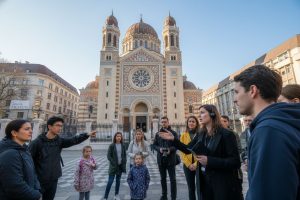
Budapest feels like a city pulled straight from the pages of a history book. But with over 1,000 years of settlements shaping its streets and skyline, this place is anything but stuck in the past. Its most fascinating story is how it keeps re-inventing itself, surviving invasions, revolutions, and even city mergers to become one of Europe’s most vibrant cultural capitals.
Table of Contents
- The Rich History Of Budapest: An Overview
- Cultural Significance: Why Budapest Matters
- Architectural Marvels: Symbols Of Budapest’s History
- Historical Events That Shaped Budapest
- Budapest’s Role In Modern Europe: A Lasting Legacy
Quick Summary
| Takeaway | Explanation |
|---|---|
| Budapest’s history is rich and diverse. | The city showcases layers of civilizations from ancient Roman times to modern Europe, making it historically significant. |
| Architectural styles reflect cultural evolution. | Structures like Buda Castle and the Parliament Building illustrate Budapest’s artistic and political transformations over centuries. |
| Unification marked a turning point. | The 1873 merging of Buda, Pest, and Óbuda paved the way for urban development, shaping modern Budapest. |
| Resilience amid historical challenges. | Despite wars and governance changes, Budapest has continually adapted, preserving its cultural identity. |
| Intellectual contributions are significant. | The city has produced notable figures in arts and sciences, indicating its role as a cultural hub in Europe. |
The Rich History of Budapest: An Overview
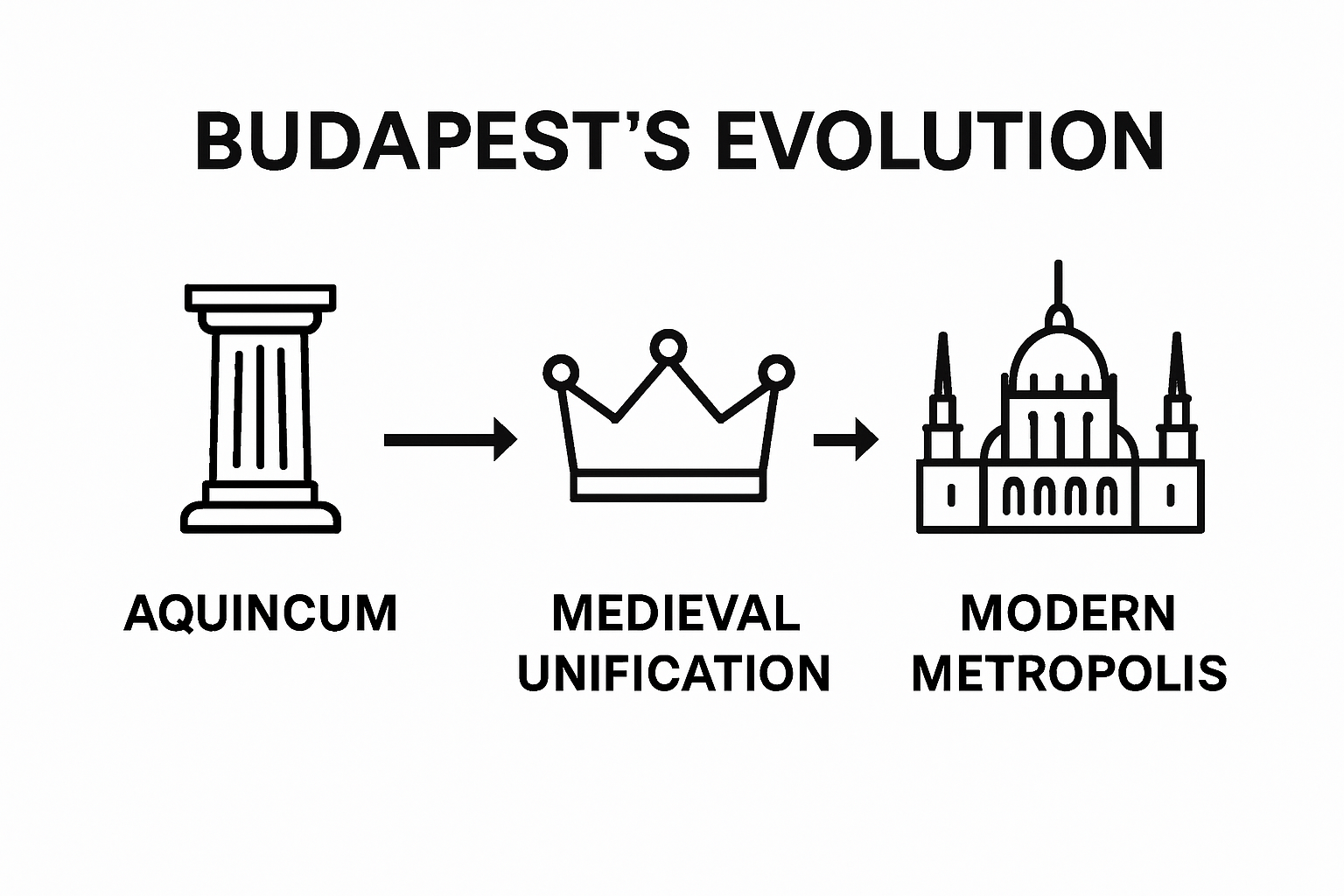
Budapest represents a profound historical tapestry where multiple civilizations have converged, creating a city that serves as a living testament to European transformation. From ancient Roman settlements to medieval kingdoms and modern metropolitan landscapes, Budapest encapsulates centuries of dynamic cultural evolution.
Ancient Roots and Roman Foundations
The city’s historical journey begins with prehistoric settlements along the Danube River. According to UNESCO World Heritage documentation, the area was initially inhabited during the Palaeolithic era, with significant developments occurring during the Roman period. Aquincum, the Roman settlement that predated modern Budapest, emerged as a crucial military and administrative center, establishing foundational urban infrastructure that would later influence the city’s architectural and cultural landscape.
Medieval Transformation and Unification
The medieval period marked a critical phase in Budapest’s historical narrative. Buda and Pest existed as separate entities, each with unique characteristics and administrative structures. Their strategic locations along the Danube River made them important trading and cultural hubs. The pivotal moment came in 1873 when these two cities, along with Óbuda, were officially unified, creating the metropolitan area we recognize today. This unification symbolized not just geographical consolidation but a profound cultural and administrative metamorphosis.
For travelers eager to explore more about Hungary’s rich historical context, our comprehensive guide offers deeper insights into the country’s cultural heritage.
Architectural and Cultural Significance
Budapest’s architectural landscape reflects its complex historical journey. From Gothic and Renaissance influences in the Buda Castle Quarter to the Neo-Gothic Parliament building, each structure tells a story of artistic and cultural transformation. The city has survived numerous historical challenges, including Ottoman invasions, Habsburg rule, World Wars, and communist governance, emerging as a resilient symbol of Hungarian national identity and cultural persistence.
Cultural Significance: Why Budapest Matters
Budapest stands as more than a geographical location; it represents a profound cultural nexus where historical narratives, artistic expressions, and human resilience intersect. The city embodies a remarkable testament to human creativity, survival, and transformation through centuries of complex political and social landscapes.
A Crossroads of Cultural Heritage
The cultural significance of Budapest emerges from its unique position as a melting pot of diverse civilizations. Throughout history, the city has been influenced by various cultural currents: Magyar traditions, Ottoman architectural styles, Habsburg imperial aesthetics, and modern European sensibilities. These multiple layers have created a rich, complex urban fabric that reflects the nuanced story of Central European identity. Our guide to Hungarian landmarks offers deeper insights into these cultural intersections.
Artistic and Intellectual Legacy
Budapest has been a crucible of intellectual and artistic innovation. The city has produced numerous globally recognized figures in science, literature, and arts. Luminaries like composer Béla Bartók, photographer Robert Capa, and physicist Edward Teller emerged from this intellectual environment, demonstrating Budapest’s capacity to nurture extraordinary talent. The city’s academic institutions, museums, and cultural centers continue to be vibrant platforms for creative expression and scholarly discourse.
Symbol of Resilience and Transformation
According to UNESCO’s documentation, Budapest exemplifies a city that has repeatedly reinvented itself through challenging historical periods. From the Ottoman occupations to the tumultuous 20th-century conflicts, Budapest has consistently demonstrated remarkable resilience. Its architectural landscape, cultural institutions, and social fabric bear witness to survival, adaptation, and continuous regeneration. The city does not merely preserve history; it actively reinterprets and reimagines its cultural narrative, making it a living, breathing testament to human endurance and creativity.
Architectural Marvels: Symbols of Budapest’s History
Budapest’s architectural landscape serves as a living museum, where each building narrates a chapter of the city’s complex historical journey. The structures are not merely physical constructions but powerful storytellers that encapsulate centuries of cultural transformation, political shifts, and artistic evolution.
Gothic and Baroque Foundations
The city’s architectural heritage begins with profound Gothic and Baroque influences that reflect its medieval and imperial past. The Buda Castle, perched majestically above the Danube, exemplifies this architectural narrative. Its intricate design showcases multiple architectural periods, from medieval foundations to Habsburg-era reconstructions. Explore more about Hungary’s most iconic landmarks and their historical significance.
Neo-Gothic and Art Nouveau Splendors
By the late 19th and early 20th centuries, Budapest embraced more dramatic architectural styles. The Hungarian Parliament Building stands as the quintessential example of Neo-Gothic architectural brilliance. According to architectural historians, this monumental structure represents not just a political institution but a symbol of national identity. Simultaneously, the city flourished with Art Nouveau masterpieces, such as the stunning Gresham Palace, which blends intricate decorative elements with functional design.
Modern Architectural Resilience
Budapest’s architecture tells a story of survival and reinvention. Despite experiencing significant historical disruptions including World Wars and communist governance, the city’s buildings have consistently been restored, repurposed, and reimagined. Ruin bars in the Jewish Quarter, transformed from dilapidated buildings into vibrant social spaces, perfectly illustrate this architectural resilience. Each structure represents a palimpsest of historical layers, where old and new coexist harmoniously, creating a unique urban landscape that continues to evolve and inspire.
The following table summarizes key architectural styles found in Budapest and their historical significance. This helps readers quickly understand how each style reflects different periods of the city’s development.
| Architectural Style | Example Structure | Historical Period | Significance |
|---|---|---|---|
| Gothic | Buda Castle | Medieval | Reflects medieval foundations and early fortifications |
| Baroque | Buda Castle (later parts) | Habsburg Era | Represents reconstruction and imperial influence |
| Neo-Gothic | Hungarian Parliament | Late 19th Century | Symbolizes national identity and urban expansion |
| Art Nouveau | Gresham Palace | Early 20th Century | Showcases decorative innovation and artistic renewal |
| Modern Restorations | Ruin Bars (Jewish Quarter) | Post-World War II/Modern | Illustrates adaptive reuse and cultural resilience |

Historical Events That Shaped Budapest
Budapest’s historical trajectory is a profound narrative of resilience, transformation, and cultural complexity. The city has not merely witnessed history but has been actively molded by pivotal moments that fundamentally reshaped its social, political, and cultural landscape.
Medieval Foundations and Renaissance Emergence
The city’s foundational period was marked by significant transformative events. After the devastating Mongol invasion in 1241, King Béla IV initiated substantial urban reconstruction, establishing stone fortifications that would become the nucleus of Buda Castle. For more insights into Hungary’s most significant historical landmarks, explore our comprehensive guide. The Renaissance period under King Matthias Corvinus represented another critical juncture, transforming Budapest into a significant cultural and intellectual center. During this era, the city experienced unprecedented artistic and architectural development, attracting scholars and artists from across Europe.
Imperial Challenges and Unification
According to historical documentation, the 19th century emerged as a crucial period of metamorphosis. The 1873 unification of Buda, Pest, and Óbuda marked a revolutionary moment in the city’s history. This administrative consolidation catalyzed rapid urban development, infrastructure expansion, and cultural integration. The Austro-Hungarian Empire’s influence during this period brought substantial architectural and social transformations, positioning Budapest as a significant metropolitan center in Central Europe.
20th Century Turbulence and Renewal
The 20th century presented Budapest with unprecedented challenges and opportunities for reinvention. World War II brought immense devastation, with the city experiencing brutal occupation and significant population losses. The subsequent communist era fundamentally altered Budapest’s social and architectural landscape. Despite these challenging periods, the city demonstrated remarkable resilience. The 1956 Hungarian Revolution and the eventual fall of communist governance in 1989 represented profound turning points, symbolizing Budapest’s enduring spirit of resistance and hope for democratic transformation.
This table outlines pivotal historical events that have shaped Budapest, providing readers with a clear chronological overview of transformations discussed in the article.
| Historical Era | Key Event/Development | Impact on Budapest |
|---|---|---|
| Medieval and Renaissance | Mongol invasion (1241), fortification of Buda | Urban reconstruction and cultural emergence |
| Renaissance | Reign of King Matthias Corvinus | Artistic, scholarly, and architectural flourishing |
| Imperial Era and Unification | Unification of Buda, Pest, Óbuda (1873) | Urban expansion and modernization |
| World Wars and Communist Period | WWII devastation, communist rule | Destruction, population loss, and socio-political shifts |
| Democratic Transition | 1956 Revolution, fall of communism (1989) | Restoration of democratic institutions and civic renewal |
Budapest’s Role in Modern Europe: A Lasting Legacy
Budapest represents more than a geographical location in Europe; it embodies a dynamic symbol of cultural resilience, political transformation, and intellectual innovation. The city has consistently emerged as a critical junction where historical narratives intersect with contemporary global dynamics.
Political Transformation and Democratic Ideals
Following the fall of communist governance, Budapest became a powerful emblem of democratic transition in Central Europe. The city played a pivotal role in challenging Soviet control, with the 1956 Hungarian Revolution serving as a profound testament to its commitment to freedom. Explore more about Hungary’s remarkable UNESCO World Heritage sites that capture this historical journey. Budapest’s transition represented not just a local transformation but a broader narrative of Eastern European democratization that resonated across the continent.
Cultural and Intellectual Bridge
Budapest has consistently functioned as an intellectual crossroads between Western and Eastern European traditions. Its universities, research institutions, and cultural centers have nurtured groundbreaking thinkers who have significantly contributed to global scientific, artistic, and philosophical discourse. The city’s unique positioning allows it to serve as a mediator, translating and integrating diverse cultural perspectives within the broader European context.
Economic and Diplomatic Significance
In the contemporary European landscape, Budapest has emerged as a critical economic and diplomatic hub. Its strategic location, well-developed infrastructure, and historical experience of multicultural interactions position it as an essential node in European networks. The city attracts international businesses, hosts significant diplomatic conferences, and serves as a key transportation and communication center. Budapest’s role extends beyond national boundaries, representing a microcosm of European integration, where historical complexity meets modern global interconnectedness.
Turn Budapest’s History Into Your Next Adventure
Feeling inspired by Budapest’s layered past but unsure how to truly experience it in person? You are not alone. Many travelers want more than just stories from the past—they seek real connections with the city’s living heritage, from its majestic architecture to its unique cultural traditions. The challenge often comes down to knowing where to start and how to make the most of your time, especially when so much beauty and history is waiting to be explored.
Unlock the secrets of Budapest’s remarkable history and culture with our expert travel insights. Dive deeper into handpicked guides, curated local experiences, and top sights that bring the city’s historic charm to life. Do not miss the chance to craft your own unforgettable cultural journey—explore our main site now for detailed tips and inspiration, or broaden your perspective with Hungary’s wider stories. Discover Budapest beyond the guidebooks and start planning your authentic experience today.
Frequently Asked Questions
What are the historical roots of Budapest?
Budapest’s history dates back to prehistoric settlements along the Danube River, with significant development during the Roman period, particularly in the Roman city of Aquincum.
How did Budapest transform during the medieval period?
During the medieval period, Budapest emerged as two separate entities, Buda and Pest, which were unified in 1873, leading to cultural and administrative transformation in the region.
Why is Budapest’s architectural landscape significant?
Budapest’s architecture showcases a blend of Gothic, Baroque, Neo-Gothic, and Art Nouveau styles, reflecting its complex history and rich cultural evolution through centuries of political and social change.
What role did Budapest play in the political transformations of Europe?
After the fall of communist governance, Budapest became a symbol of democratic transition in Central Europe, representing broader movements for freedom and reform across the region.