When talking about global trends in entertainment, most people think of Hollywood, Silicon Valley, or Tokyo. But in the case of escape rooms, the true epicenter lies elsewhere—deep in the heart of Central Europe. Budapest, the capital of Hungary, is where the modern escape room movement exploded, forever transforming how we play, think, and collaborate.
The boom began in 2012, but its roots go back a little earlier. A man named Attila Gyurkovics opened a small, unassuming venue called Parapark in 2011 in Budapest’s 9th district. What started as a social psychology experiment turned into an immersive, real-life game that blended narrative, logic, teamwork, and adrenaline in ways no one had seen before. Within months, Parapark was fully booked—days, then weeks, in advance.
That was the spark. What followed was a phenomenon that would change both the entertainment industry and Budapest’s global image forever.
The Origins of the Modern Escape Room
The idea of locking people in a room and challenging them to escape using their minds was not entirely new. Japanese game designer Takao Kato had launched a live-action version of puzzle-solving events in 2007, and some experimental games were developed in the United States around the same time. However, these early concepts were closer to interactive theater or staged scavenger hunts. They lacked the consistent logic, realistic environments, and structured gameplay that define escape rooms today.
The breakthrough in Budapest came from a unique convergence of influences: a rich cultural history, a thriving underground creative scene, and a deep appreciation for mystery and narrative. Combined with low property costs in the early 2010s, Budapest provided fertile ground for a new kind of entertainment that didn’t require screens or technology—just clever puzzles, smart design, and a bit of theatrical flair.
Unlike the earlier prototypes in Japan or Silicon Valley, Budapest’s escape rooms had something more: a replicable formula. The balance of logical problem-solving, immersive storytelling, and physical interaction proved scalable, affordable, and deeply enjoyable across cultures. And it was this balance that allowed the concept to explode not just locally, but internationally.
A City Transformed by Play
By 2013, escape rooms in Budapest were everywhere. What began with Parapark quickly evolved into a full-fledged industry. Dozens of venues popped up in central districts—some in cozy basements, others in abandoned apartments, old factories, or even former Cold War bunkers. Each room offered a different theme: bank heists, haunted hospitals, spy missions, archaeological digs, or dystopian futures.
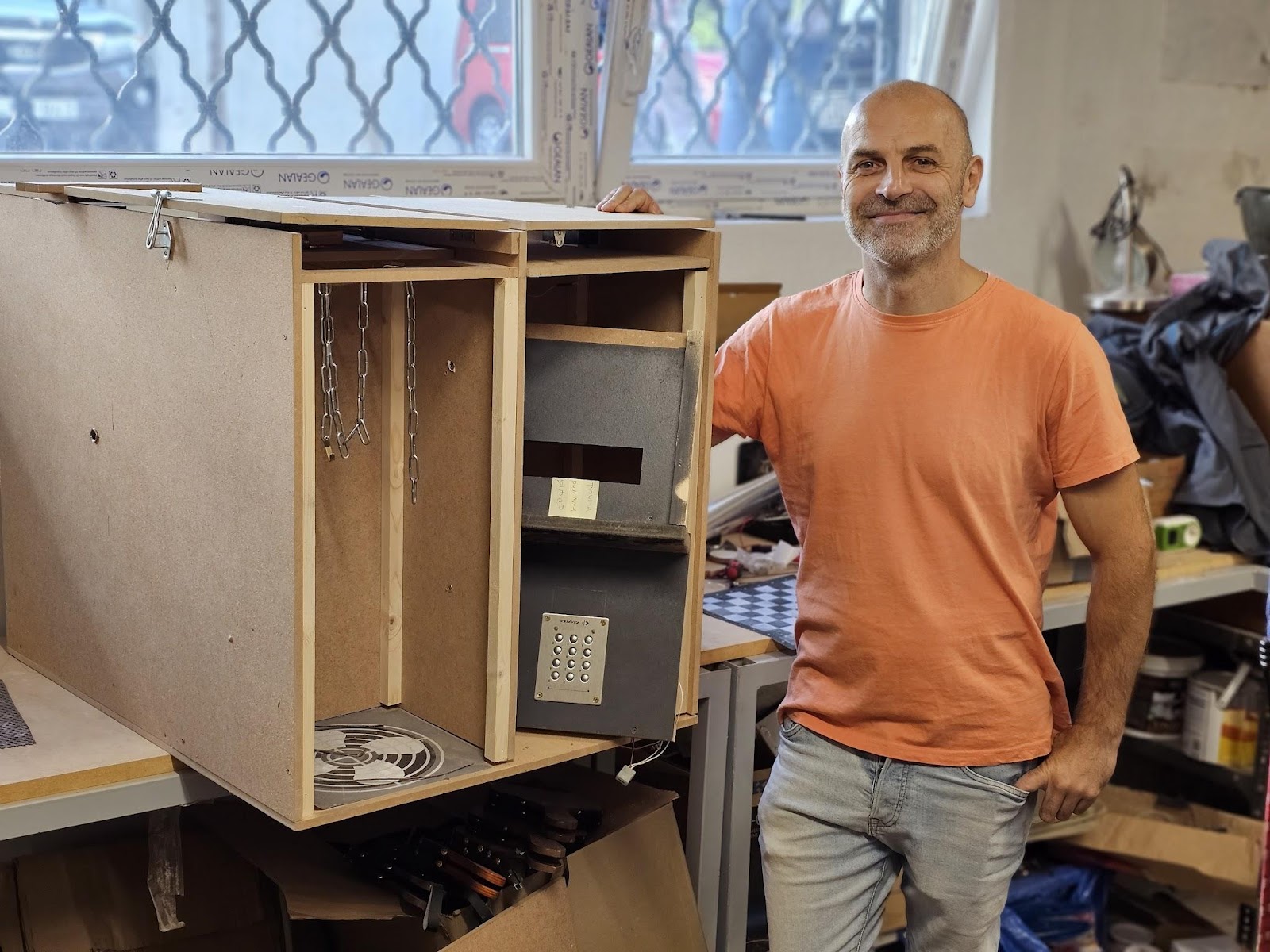
Attila Gyurkovics, the founder of Parapark photo: exittheroom.hu
This wasn’t just a passing trend. Budapest had tapped into something primal: the joy of solving mysteries, the excitement of discovery, and the emotional payoff of escaping—together. Word spread fast. Tourists started to come specifically for escape rooms. Bachelor parties, corporate teams, students, families—all eager to test their minds and nerves.
By 2014, Hungarian escape room designers were being hired across Europe to build games in Germany, the Netherlands, Austria, and even the UK. They brought with them not just technical expertise, but a very Budapest-style aesthetic: mysterious, grungy, clever, and story-rich. Many of these international rooms were direct copies or franchises of original Budapest venues. Some designers even became international consultants, developing entire entertainment chains abroad.
A Symbol of Cultural Innovation
In the eyes of many, Hungary’s most exciting export was no longer goulash or classical music, but escape rooms. And it’s not hard to see why. These experiences combine everything Hungarians have long been known for: intellectual rigor, inventiveness, dark humor, and love for layered narratives.
Escape rooms also benefited from Budapest’s unique urban fabric. Just as ruin bars revitalized the city’s abandoned buildings into cultural hubs, escape rooms gave a second life to the city’s crumbling but character-filled apartment blocks. Their creaky staircases, labyrinthine corridors, and faded facades made them perfect settings for mystery and adventure. You didn’t need Hollywood production budgets—Budapest’s buildings were already halfway there.
This cultural fusion gave rise to a tourism model unlike any other in Europe. Travel blogs, YouTube channels, and even news networks started calling Budapest the “escape room capital of the world.” Entire weekends were planned around hopping from one room to another, with players challenging themselves to complete as many as possible before heading to the next city. The term “escape tourism” was born.
Economic and Global Impact
The escape room boom wasn’t just a cultural moment—it became a serious business. By 2016, it was estimated that Budapest had over 80 active escape rooms, serving tens of thousands of players monthly. Many operated in multiple languages, catering to the growing international crowd. Airbnb hosts began offering “escape & stay” packages. Tour companies created puzzle-based walking tours. Escape room apps, merchandise, and even escape room-themed cafes began to appear.
Other cities took note, but none could replicate Budapest’s early mover advantage, nor its quirky, intellectual charm. Even when escape rooms began popping up in major cities like London, Berlin, and Paris, they often paled in comparison to their Hungarian counterparts in complexity and atmosphere.
The global reach was undeniable. In 2017, the Escape Room World Championship, organized by Red Bull Mind Gamers, chose Budapest for its grand finale. Contestants from around the globe descended on the Hungarian capital to solve what was dubbed “the most challenging escape room ever built.” It was a poetic full circle: the city that had birthed the trend was now its most prestigious stage.
What Makes Budapest Escape Rooms Special?
There’s something unmistakably Budapest about its escape rooms. It’s not just the architecture or the puzzles—it’s the atmosphere. These rooms have soul. They reflect a certain melancholy charm that runs deep through the city’s identity. From Soviet-era props to Hungarian folklore, each game feels connected to the spirit of the place. And unlike many international chains, Budapest venues are often passion projects, run by creators who love the craft more than just profit.
Budapest escape rooms also continue to innovate. Some rooms now blend augmented reality with physical puzzles. Others use live actors to heighten suspense. New genres have emerged—horror escape rooms, historical reconstructions, competitive formats, and even open-air escape games that take place across entire neighborhoods.
And yet, even with all the innovation, Budapest’s escape rooms retain their human touch. They are designed to be social, tactile, immersive. Players leave not only with memories, but with a sense of connection—to the story, to each other, and to the city itself.
The Legacy of a Basement Game
What started as a simple basement game in 2011 has grown into a worldwide industry worth hundreds of millions. But while escape rooms now exist on every continent, from Singapore to Seattle, the heart of the movement still beats in Budapest.
The city’s escape room legacy is more than a business success—it’s a testament to Hungary’s enduring creativity and its power to shape global culture through ingenuity and play. Budapest didn’t just give the world a new kind of game. It redefined how we experience stories, how we solve problems, and how we connect with one another.
And in a world that’s increasingly digital, competitive, and fragmented, the humble escape room—rooted in cooperation, curiosity, and human interaction—feels more relevant than ever.
Visiting Budapest soon? Don’t just see the sights—solve them. Whether you’re a first-timer or an escape room veteran, there’s no better place to play than the city where it all began. And maybe, just maybe, you’ll walk away with more than just a victory—you’ll become part of a global story that started in the basement of a Hungarian apartment.